What Does ‘Monkey’ Mean in Blackjack? The Table Slang Explained
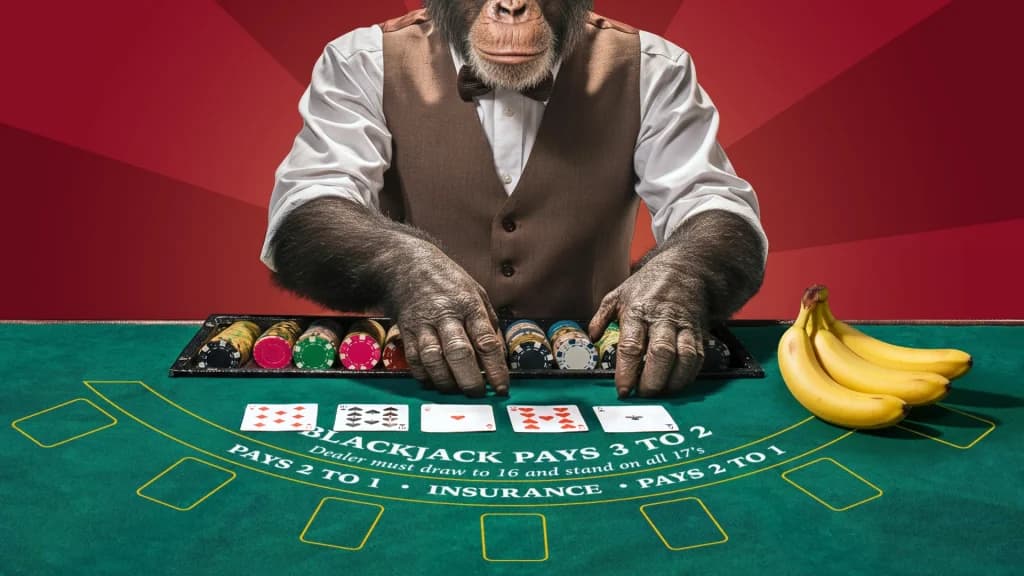
You’re sitting at a blackjack table, the dealer’s showing a 6, someone to your left is doubled down on 11, and then it happens: “Monkey! Give me a monkey!” The whole table leans in. A face card slides across the felt. The table exhales.
If you just thought, “what is a monkey?”, you’re about to find out. A monkey is any 10-value card. The word is a piece of genuine casino slang with a surprisingly deep history, and once you know it, you’ll hear it at every table you sit at.
Monkey, Defined: Any 10-Value Card
A monkey is any card worth 10 points: a ten, a jack, a queen, or a king. When a player calls for a monkey, they’re asking the next card off the shoe to be one of those sixteen.
Some players use the term a little more loosely, when they say monkey, they’re picturing a face card specifically (jack, queen, or king), not the plain ten. In practice, either usage covers the same general territory: a high card worth 10 that’s going to make or break the next play.
However a player defines it, the emotional meaning is always the same: give me a ten-value card, right now.
When Do Players Call for a Monkey?
There are two moments when a monkey really matters:
Situation 1: You need a ten for yourself. Sitting on a 10 or 11, you’ve just doubled down, and one card determines whether you walk away with a strong hand or a disappointing total. A monkey turns your 10 into 20 or your 11 into 21. The call is pure table energy, hoping out loud for the card that makes the hand.
Situation 2: You need the dealer to bust. The dealer is showing a weak upcard, a 5 or a 6. Table logic says they’re likely holding something low underneath. If a monkey comes off the deck, that weak upcard suddenly becomes a total of 15 or 16, and the dealer has to hit. Another monkey busts them. The whole table is calling for the same card at once, which is part of what makes it feel like a team sport.
Where Did the Term “Monkey” Come From?
Nobody knows for certain, the origins are actually debated, but the most widely accepted theory traces the term back to Asian gambling culture, particularly Chinese and Southeast Asian casino rooms.
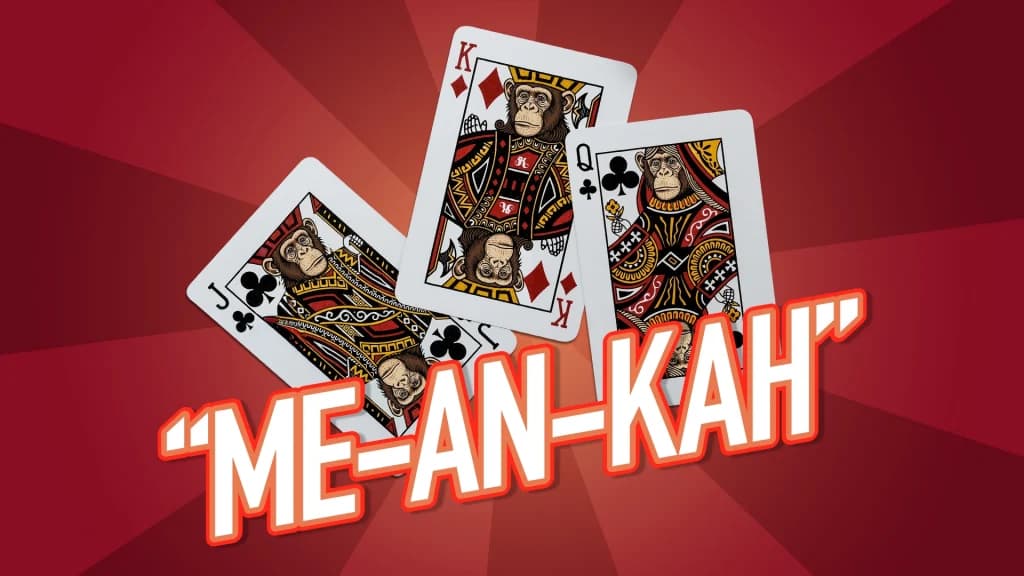
In Mandarin and Cantonese, the word for face card sounds phonetically similar to words that some scholars and casino historians connect to “monkey.”
In Mandarin, a word for “face card,” “me-an-kah,” sounds similar to “monkey.” In Cantonese, the word for “nothing” (as in baccarat, where face cards are worth nothing) is “moong-yah”, which sounds similar, too. Over years of blending (and yes, possibly butchering) accents and table banter, those sounds morphed into “monkey,” and it stuck.
The baccarat connection is the most cited: baccarat was enormously popular in Asian casinos, and face cards, worth zero in baccarat, were simultaneously the most exciting cards in blackjack. The slang followed players from one game to the other.
The connection to baccarat explains why the term turns up in both games today. In baccarat, a monkey (10-value card) is still worth zero, a completely different meaning from blackjack, but the word stuck across both tables.
A lighter theory, the monarchy explanation: the Jack, Queen, and King are members of the court, they’re royalty, therefore “monkey” is a mangled shorthand for “monarchy.” It’s a charming story. Most etymology researchers consider it less likely than the phonetic origin theory.
One more regional note: in the UK and Australia, “monkey” has nothing to do with cards. It refers to a £500 or $500 sum of money, completely separate slang that happens to share the same word. If you’re at a London casino and someone mentions a monkey, they might be talking about a bet, not a card.
Do You Have to Say “Monkey” at the Table?
No. Saying “monkey” changes absolutely nothing about the outcome. The next card is already determined. You’re not influencing the shoe, you’re just narrating your hope out loud.
That said, calling for a monkey is one of the simple joys of a blackjack table. It’s a shared language. When someone says it and a face card lands, there’s a collective moment that you can’t really manufacture any other way. The ritual is the point.
As for etiquette: most tables take it well. Some rooms run louder and more playfully than others. Read the energy before you start narrating every hand, in a quieter room, a few well-timed calls land better than a running commentary.
Other Blackjack Slang Worth Knowing
The monkey isn’t alone. Here’s the slang glossary you’ll actually use:
- Paint: Another word for a face card, because they’re “painted” (the Jack, Queen, and King are illustrated, not just printed with numbers). Interchangeable with monkey in most uses.
- Snapper: A natural 21, an Ace plus any 10-value card on the opening two cards. The best hand you can be dealt.
- Ploppy: A player who makes obviously poor strategy decisions and doesn’t care. Usually said with mild exasperation, rarely to their face. Not an insult at a polite table.
- Stiff hand: A hard total of 12 through 16, hands that are too high to hit without busting risk, but too low to stand against a strong dealer upcard. The uncomfortable middle ground.
- First base: The seat immediately to the dealer’s left. The first player to receive cards and the first to act each round.
- Burn card: The first card dealt from a fresh shoe, removed from play and placed in the discard pile without being used. Standard casino practice, part of normal dealing procedure.
For more on table vocabulary and how to move at the table, see blackjack tips and tricks and common rookie blackjack mistakes.
Go Ahead and Call for Your Monkey
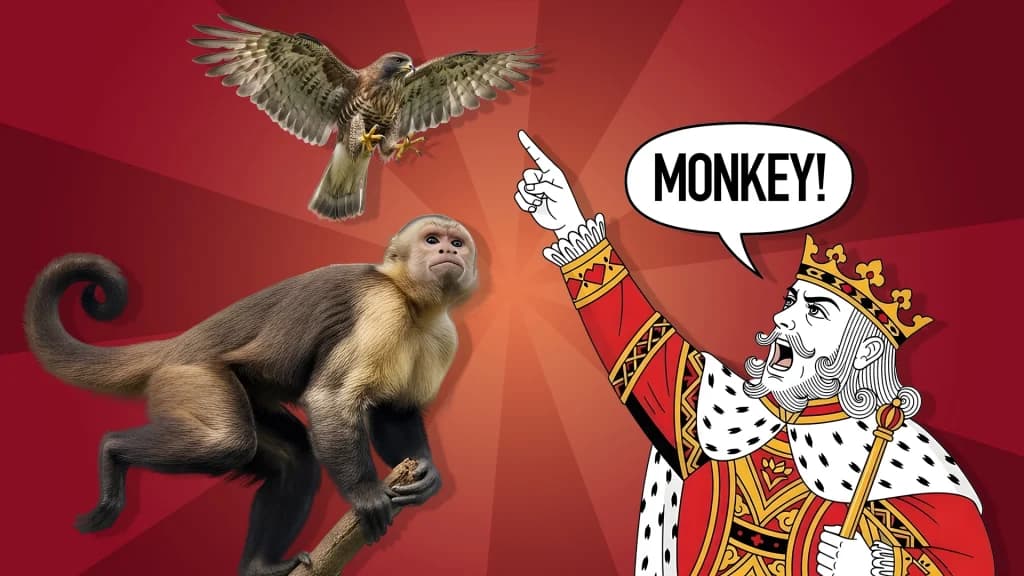
You’re fluent now. A monkey is any 10-value card. You call for one when you need a ten for yourself or when you’re hoping the dealer busts. The word comes from Asian gambling culture, almost certainly by way of baccarat, and it’s been living at blackjack tables ever since.
Next time the dealer shows a 6 and someone at your table leans back and says it, you’ll know exactly what they mean.
Play for fun, set a budget that works for you, and play within it. For free, confidential support, contact the National Problem Gambling Helpline at 1-800-522-4700 or ncpgambling.org.
Ready to play? Find your blackjack table at Cafe Casino.
FAQs
Is a monkey a face card or any 10-value card?
Technically, any card worth 10: the ten, jack, queen, or king. In everyday table use, some players mean face cards specifically (jack, queen, king), not the plain ten. Either way, the emotional point is the same: a 10-value card that can make or break the hand.
Why do players shout monkey when the dealer is about to bust?
Because a 10-value card under a dealer’s weak upcard often leads to a bust. If the dealer shows a 5 or 6, they likely have a low hole card and must hit, another ten would take them over 21. A monkey lands the whole table in the win column at once.
Where does the word monkey come from in blackjack?
Most likely from Asian gambling culture, where a phonetically similar word for face card made its way into English casino slang via baccarat. The exact origin is debated, but the baccarat connection is well-supported and widely accepted.
Is it offensive to say monkey at a blackjack table?
No. It’s common, harmless casino slang for a 10-value card. The term is part of the shared language of the blackjack table and is used comfortably across casinos worldwide. Context makes the meaning clear.
Does saying monkey actually help you win?
Not even slightly. The next card is fixed before it leaves the shoe. Calling for a monkey is a social ritual and a way to express what you’re hoping for, it has no effect on the outcome.
Does monkey mean the same thing in baccarat?
Yes and no. In baccarat, a monkey still refers to a 10-value card, but those cards are worth zero, the opposite of powerful. In blackjack, a monkey is one of the most valuable cards you can get. Same word, different game, different stakes.
More Blackjack Tips
July 30, 2026
What Is Insurance in Blackjack?
Blackjack insurance pays 2:1 but carries a 7.5% house edge. Learn how it works, when to take it, and why basic strategy says skip it.
July 15, 2026
Early Payout Blackjack: Should You Use It?
Not sure what early payout blackjack means or whether to use it? This guide explains how the feature works, how the offer is calculated, and when it makes sense.
August 13, 2026
When To Surrender In Blackjack
Blackjack surrender means you fold your starting hand and give up half of your original bet. Learn when optimal strategy says to use it and when to skip it.
July 15, 2026
212 Blackjack Strategy: How the Manhattan System Works
The 212 blackjack strategy increases your bets after wins, in the pattern of 2-1-2, and so on. Learn how to use it, how it compares, and if it helps you win.