What Is Insurance in Blackjack?

Blackjack insurance is a side bet available when the dealer shows an ace. It costs half your original wager and pays 2:1 if the dealer has blackjack. Most experienced players skip it every time – and the maths explains exactly why.
This page covers how the insurance bet works in blackjack, what the numbers actually look like, when (if ever) it makes sense to take it, and what to do instead.
How Does Blackjack Insurance Work?
Here’s how it plays out step by step:
- The dealer’s up card is an ace.
- Before the dealer checks the hole card, the table is offered insurance.
- You can place an insurance bet of up to half your original wager.
- The dealer checks the hole card. If it’s a ten-value card, the dealer has blackjack.
- If the dealer has blackjack and you took insurance, your insurance bet pays 2:1. Your original bet loses unless you also have blackjack. If the dealer doesn’t have blackjack, you lose the insurance bet and play continues normally.
Here’s what each combination of outcomes means for your money:
| Scenario | Your original bet | Your insurance bet | Net result |
| Dealer has blackjack, you took insurance | Lose | Win 2:1 | Break even on the round |
| Dealer has blackjack, no insurance | Lose | N/A | Lose your original bet |
| Dealer has no blackjack, you took insurance | Play continues | Lose | Down half your original stake |
| Dealer has no blackjack, no insurance | Play continues | N/A | No side bet cost |
Is Blackjack Insurance Worth It?
Short answer: no, for the vast majority of players in the vast majority of games.
When the dealer shows an ace, they have blackjack roughly 31% of the time. A fair payout for a 31% chance would be around 2.24:1. Insurance pays 2:1. That gap – between what the bet pays and what it should pay for the risk you’re taking – is where the house edge comes from.
Insurance carries a house edge of around 7.5% – compared to roughly 0.5% for basic strategy blackjack. That’s fifteen times worse.
Here’s how the three main bet types compare:
| Bet type | House edge | Verdict |
| Basic strategy blackjack | ~0.5% | Best available option |
| Insurance bet | ~7.5% | Avoid in almost all cases |
| Typical blackjack side bets | 3-10%+ | Generally not worth it |
The bottom line: insurance feels like protection but it’s a losing bet over time. The payout doesn’t reflect the actual probability. Skip it.
When Should You Take Insurance in Blackjack?
For most players in most games: never. The house edge on insurance is too high and the payout too low relative to the actual probability of the dealer having blackjack.
There is one exception worth knowing about – card counting. If you’re counting cards and the true count is +3 or above, the remaining deck is rich in ten-value cards. In that situation, the dealer is more likely to have blackjack than usual, and insurance can become a mathematically positive bet. This applies in single-deck or double-deck games where counting is feasible.
The card counting exception is real – but it doesn’t apply to online multi-deck blackjack. If you’re playing at Cafe Casino or any other online casino, the shoe is reshuffled regularly and counting doesn’t give you the information needed to make insurance worthwhile.
If you’re playing online, the card counting case for insurance simply doesn’t exist. Save the insurance premium and keep it in play.
When You Have a High Hand
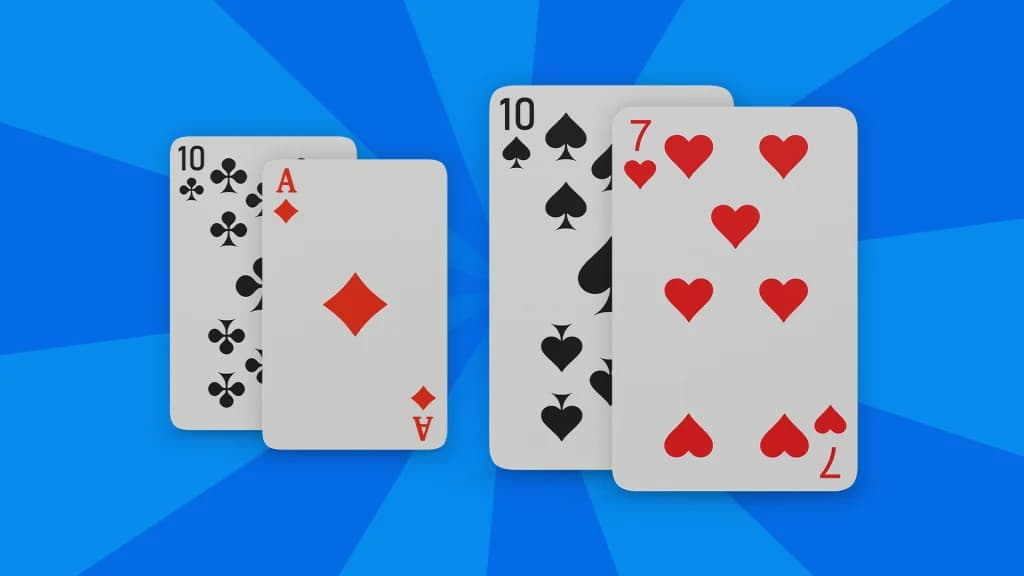
Many players are tempted by insurance when holding a strong hand, such as 19 or 20. The logic is simple but flawed: “If the dealer has blackjack, I’ll lose my big bet. I should protect it somehow.”
But it doesn’t work that way. We’ll take insurance and show you what happens.
- You bet $10 on your main hand.
- You take $5 insurance.
- Dealer does not have blackjack.
- You lose the $5 insurance.
- You win the hand and get paid $10 (1:1 on your main bet).
- Net gain: $5 instead of $10.
Dang it. You should have stuck with your regular bet.
Even if the dealer does have blackjack, you’ll win insurance but naturally lose your hand, which results in breaking even. Hardly worth the risk.
When You Have a Low Hand
In another, parallel universe, let’s say you have a weak hand, like 14, 15, or 16 (although soft 16 is a different story). You might believe it’s worth taking insurance “just in case.” The thinking goes something like this: I’m probably going to lose anyway, so I might as well try to win something back.
We get it. Desperate times, right?
But remember. Your hand has absolutely zero impact on whether the dealer has blackjack. Insurance is only a bet on whether the dealer’s hole card is a 10-value. If it isn’t, you lose. Simple as that.
The One Exception – Card Counting
In Hi-Lo card counting, insurance becomes mathematically favorable when the true count reaches +3 or higher. This, however, only applies to single deck and double deck games, and cannot be used for online multi-deck play
Even Money vs Blackjack Insurance
Even money is a specific version of the insurance bet. It’s offered when you have a natural blackjack and the dealer shows an ace. Instead of waiting to see the dealer’s hole card, you can take a guaranteed 1:1 payout right now rather than the standard 3:2.
Mathematically, even money is the same bet as insurance – just packaged differently for the scenario where you hold blackjack. The recommendation is the same: skip it.
A guaranteed 1:1 sounds appealing, but the expected value of playing out the hand is higher. The dealer doesn’t have blackjack 69% of the time – meaning most of the time you’d collect 3:2 by just waiting. Taking 1:1 every time costs you that edge over the long run.
What is even money in blackjack – full guide
What to Do Instead of Taking Insurance
Three things that actually help your blackjack results, in the time you’d spend debating the insurance offer:
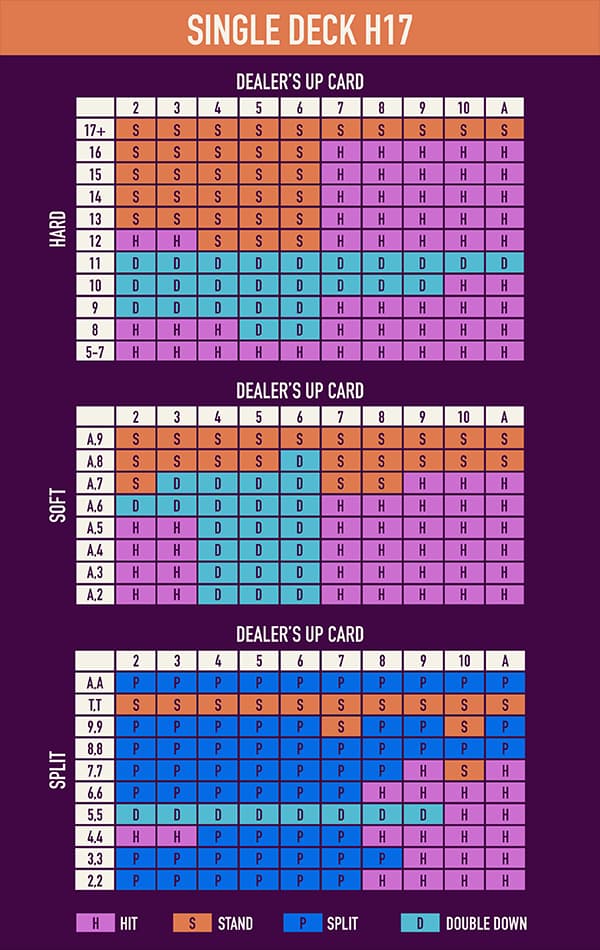
- Stick to basic strategy. It covers every hand decision – hit, stand, split, double – based on your cards and the dealer’s up card. Played consistently, it brings the house edge down to around 0.5%.
- Manage your bankroll instead. The money you’d spend on insurance keeps you at the table longer. More hands, more chances to run a winning sequence.
- Skip side bets as a general rule. Insurance is a side bet in disguise, and side bets as a category carry higher house edges than the main game. Save them for occasional fun, not regular play.
The best protection in blackjack is a solid strategy, not a side bet.
How to memorize blackjack basic strategy
Blackjack Insurance Odds & House Edge
If you’re still not convinced, the numbers are where your gut feelings go from “hmmm” to “hard pass.”
When the dealer shows an ace, they have a 1 in 3 chance – about 31% – of having a ten-value card in the hole (10, Jack, Queen, or King), which would give them a natural blackjack. That means the insurance bet loses 69% of the time, and that’s assuming a standard multi-deck game.
Do remember that the 31% figure varies depending on the number of decks – single deck can sometimes be more favorable depending on the version you’re playing.
The insurance bet pays 2:1, so when it hits, it looks nice. But even if your hand wins overall, “winning” insurance means only breaking even. You don’t win anything extra, so it’s not some kind of gotcha.
A bit mor math for those that want it broken down even further. In a 6-deck game, there are 96 ten-value cards out of 311 remaining cards (after removing the ace), giving a probability of approximately 30.87% (rounded to 31% above). So therefore, a true payout for this probability would be roughly 2.24:1, not 2:1. This gap between what the actual payout should be and what is offered is also how casinos get the edge.
On average, the blackjack house edge on insurance is around 7.5%. Compare that to blackjack’s overall 1%-ish house edge with perfect strategy, and it seems silly to settle for less on a “most likely not.”
| Bet Type | Approximate House Edge |
| Following Blackjack Basic Strategy | 0.5% |
| Insurance bet | 7.5% |
| Perfect Pairs | 4.1% |
| 21+3 | 3.6% |
This is using 8-deck blackjack as an example – remember that house edge changes depending on the number of decks in play.
The Bottom Line
Insurance is a losing bet for the vast majority of players in almost every game. The payout doesn’t match the probability, the house edge is high, and the card counting exception doesn’t apply online.
Blackjack rewards good decisions made consistently over time. Skipping insurance is one of the easier ones to get right.
It’s better to save your money, play out your hand, and let basic blackjack strategy guide your next move.
Ready to put it into practice? Play blackjack online at Cafe Casino
FAQs on Blackjack Insurance
| Question | Answer |
| What is insurance in blackjack? | A side bet offered when the dealer shows an ace. You bet up to half your original stake, and if the dealer has blackjack, the insurance bet pays 2:1. If the dealer doesn’t have blackjack, the insurance bet loses and play continues. |
| Should I take insurance in blackjack? | In almost all cases, no. The house edge on insurance is around 7.5% – much higher than the 0.5% you get playing basic strategy. The payout of 2:1 doesn’t match the actual probability of the dealer having blackjack, which is around 31%. |
| When does insurance make sense? | Only when card counting in a single or double deck game with a true count of +3 or higher. This exception doesn’t apply to online blackjack, where multi-deck shoes are regularly reshuffled. |
| Is even money the same as insurance? | Mathematically, yes. Even money is offered when you hold blackjack and the dealer shows an ace. It guarantees a 1:1 payout instead of the usual 3:2. Taking it costs you the expected value of the 3:2 payout in the 69% of cases where the dealer doesn’t have blackjack. |
| Does insurance matter if I have blackjack? | Not really. If you both have blackjack, the hand pushes and you keep your stake. Taking insurance in that scenario doesn’t improve your position – it just gives the house another way to take your money if the dealer doesn’t end up with blackjack after all. |
| What is the house edge on blackjack insurance? | Around 7.5%. Compare that to around 0.5% for basic strategy blackjack. Insurance is one of the worst bets on the table relative to the main game. |
| Should I count cards? | It’s true. Card counting isn’t just a skill director Robert Luketic made up to make Kevin Spacey look cool in 21. It’s a legit way to beat the insurance odds if you know there are lots of ten-value cards left. But most blackjack games use multiple decks, and card counting takes incredible skill. When optimal basic strategy is already sitting right there, learning card counting just to justify insurance is like learning calculus just to split the restaurant bill. Impressive, sure, but totally unnecessary. Something you should count, however, is the number of referral bonuses you can rack up at Cafe Casino. Invite as many friends as you can muster, and receive just as many cash bonuses when they sign up and make a successful deposit. |
More Blackjack Tips
August 28, 2026
Blackjack vs Poker – Which Card Game is Right for You?
Learn which game suits your strategy, skill level, and playing style best and boost your winning potential today
August 4, 2026
Blackjack Card Values Explained
Learn the values of blackjack cards, including face cards and aces. See examples that clear up any confusion, like what it means when you get an A+K.

March 23, 2026
What is even money in blackjack? A Bet You Should Skip
Is even money in blackjack a steal or a downgrade? Learn what to do when you have a natural and the dealer shows an ace. Spoiler: don’t take it. This is why.
December 10, 2024
Rookie Blackjack Mistakes (You’ll Never Make After Reading This)
Are you making these beginner blackjack mistakes? Learn how to avoid costly mistakes and easily lower the house edge with a few strategy tips.