Blackjack Bankroll Management: How to Set Limits, Size Your Bets, and Play Longer

Pull up a chair. You’ve picked your table, you know your cards, and you’ve got one more thing to sort out before the first hand: a plan for your money. That’s blackjack bankroll management in a nutshell, not a high-roller system, not card counting, just a clear set of decisions about how much you’re willing to spend and how you’ll spend it. Make those calls before you sit down and every session goes smoother, win or lose.
This guide covers the three things that matter most: setting your limits, sizing your bets, and knowing which betting systems are worth understanding. No math degree required.
How Much Money Do You Need for Blackjack?
The right starting bankroll is whatever amount you can comfortably afford to lose without it stinging. That’s the foundational principle, not a specific dollar figure, but a personal ceiling that keeps the evening fun rather than stressful.
The practical guideline most players use: bring 20 to 40 times your usual bet. At a $5 table, that means arriving with $100 to $200. At $10 a hand, you’re looking at $200 to $400. That cushion gives you enough chips to ride out a cold stretch and still be in the game when things turn.
For bet sizing within a session, the 1–2% per-round rule is the simplest guardrail. If you sit down with $200, each bet stays between $2 and $4. It sounds conservative, and it is, deliberately so. Small, steady bets turn variance into ripples rather than waves, and they give you far more hands for your money.
Variance matters here. Even with perfect play, blackjack produces cold streaks. A bigger starting cushion means a losing run feels like a rough patch rather than a crisis. Keeping bets proportional to your stack is what makes the math work in your favor over time.
Total Bankroll vs. Session Bankroll
There’s a useful distinction between what you’ve set aside for blackjack over the long term and what you’re actually putting on the table tonight. Keeping those separate is one of the simplest bankroll habits you can build.
Your total bankroll is the money you’ve allocated for casino play over weeks or months. Your session bankroll is the fraction you bring to a single sitting, maybe 20 or 25% of the total. That split means one rough session can’t derail the whole run.
| Total Bankroll | Session Bankroll | |
| What it is | All funds set aside for blackjack | Chips you bring to one sitting |
| Time frame | Weeks or months | A single session |
| Typical size | Your full playing budget | 20–25% of the total |
| Why it matters | Protects against total wipeout | Limits damage from a single bad night |
Bring only your session share to the table. Leave the rest at home, or at least off the felt. When the session bankroll is gone, the session is over, that boundary is the whole point.
Set Your Win and Loss Limits

Decide both numbers before the first hand. A stop-loss is the point at which you walk away down, say, losing half your session bankroll. A win goal is the point at which you pocket a good profit and call it a night, maybe doubling what you brought.
Hitting either number is the trigger to leave. Stop-losses prevent a bad run from chasing you into disaster. Win goals prevent a good session from sliding backward when overconfidence sets in. Neither is a guarantee of profit, they’re guardrails for your behavior, not your luck.
Setting limits before you play isn’t pessimism. It’s the discipline that separates players who enjoy the game from players who leave frustrated. Walk away at your number, even when the table feels warm.
Gambling should be entertainment. If you find yourself chasing losses or playing beyond your limits, that’s a sign to pause. For free, confidential support, reach out to the National Problem Gambling Helpline at 1-800-522-4700 or ncpgambling.org.
How to Size Your Bets
Flat betting, placing the same amount on every hand, is the default for a reason. It’s the most predictable approach, it keeps your bankroll moving at a steady pace, and it removes the temptation to swing big on a hunch.
Progressive betting adjusts your wager based on what just happened. Positive progression raises the bet after a win; negative progression raises it after a loss. Both can add structure to a session when used with discipline, but neither changes the underlying house edge. They shape how you win and lose, not whether you do.
The rule that matters more than any system: never chase. Doubling after a loss to get even is the fast route to burning through a bankroll. If the base bet is the right size for your session, a losing run doesn’t change that.
For players who want more precision, the Kelly Criterion calculates the theoretically optimal bet size as a fraction of your bankroll based on your edge. In blackjack at the recreational level, that usually points back to the 1–2% guideline. Worth knowing, but flat betting handles most situations well.
If you’re losing ground, check out common rookie blackjack mistakes for a quick diagnostic of what might be going wrong.
Betting Systems to Know
A betting system is a set of rules for how your bet changes from hand to hand. The value isn’t in the math, no system beats the house edge, it’s in the structure. Having a pattern to follow keeps decisions mechanical and reduces the emotional swings that lead to impulsive oversizing.
| System | How It Works | Risk Level | Best For |
| Martingale | Double after every loss; reset to base after a win | High | Short sessions with a healthy bankroll cushion |
| Paroli | Double after a win (up to three in a row); reset after a loss or after three wins | Low–Medium | Riding winning streaks without over-exposing the bankroll |
| Labouchere | Write a sequence of numbers; bet the sum of the first and last; cross off on a win, add the total on a loss | Medium | Players who like a methodical system with a clear target |
| 1-2-3-5 | Follow the unit sequence across four bets; reset after a loss or after completing the cycle | Low–Medium | Short positive progressions with a controlled ceiling |
Test any system at your base unit before scaling up. The Martingale in particular can punish a losing streak hard, the doubling catches up fast if table limits or bankroll intervene before the win comes.
Protecting Your Bankroll on a Losing Streak
When cards go cold, the instinct is to push harder. Do the opposite. Drop back to your base unit and slow down. A smaller bet on a bad run costs less per hand and gives you more opportunities to wait the streak out.
Drop side bets when you’re down. They carry a higher house edge than the main game and eat into a shrinking stack faster than the base hands do. Return to blackjack basic strategy, no improvisation, just the mathematically correct play on every hand.
Take a physical break. Step away from the table, even briefly. The session will still be there when you return, and a few minutes of distance is usually enough to reset the emotional temperature. Come back with your base bet and your limits in mind.
A Bankroll Management Example in Action
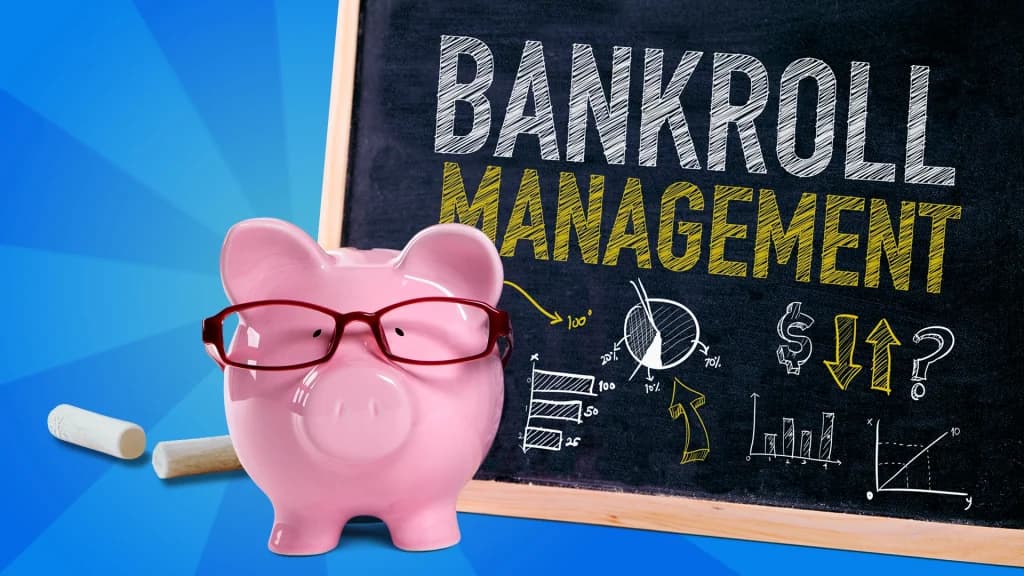
Say you’ve brought $200 to a $10 table. Your session bankroll is $200, your base bet is $10, your stop-loss is $100 (you walk if you drop to $100 remaining), and your win goal is $300 (you walk if you reach $300).
Scenario A, The win goal: You run a solid streak using a light positive progression, flat at $10, then $15 on a second consecutive win, back to $10 on any loss. After 40 hands, your stack sits at $310. Win goal hit. You color up and leave with an extra $110.
Scenario B, The stop-loss: Cards run cold. After 25 hands, your stack is at $100. Stop-loss hit. You could keep playing, the table feels like it’s about to turn, but the rule you set says no. You walk. The $100 you left with is protected, and so is the rest of your total bankroll.
The discipline in both scenarios is identical. The limit you set before sitting down is the one you honor, regardless of how you feel mid-session.
Bankroll Management Tips
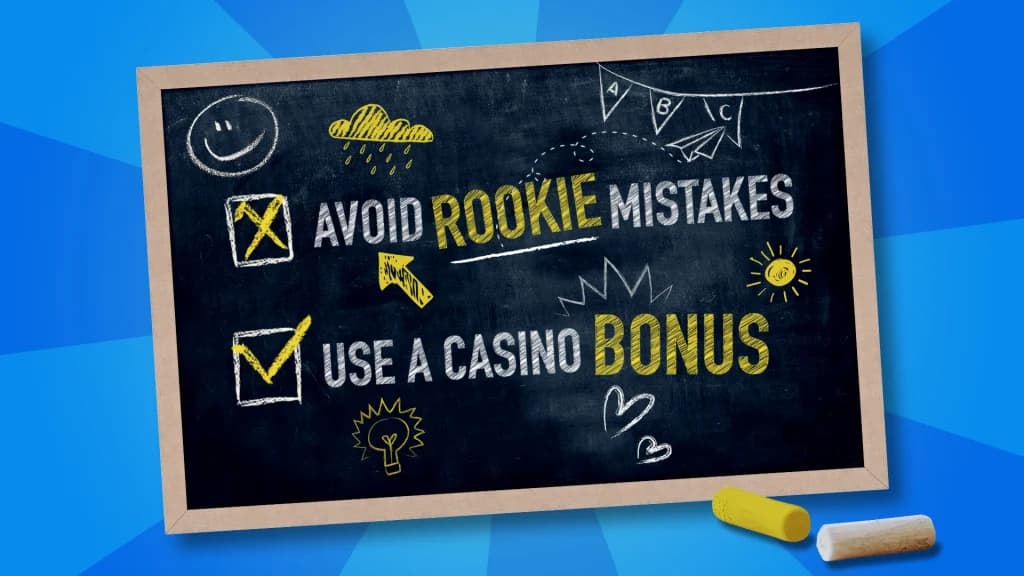
A strong blackjack bankroll survives longer when you avoid common mistakes and take advantage of any extra value the casino gives you. In other words, FREE STUFF!
Avoid Rookie Mistakes
No one wants to roll up to the blackjack table like a total dweeb, betting half their bankroll on one hand. But hey, if you didn’t know, now you do. We’re doing the good work here.
More rookie mistakes include skipping basic strategy, chasing losses, and jumping bet sizes at random, just to name a few.
Stretch Your Bankroll With a Casino Bonus
A well-timed bonus can meaningfully extend a session. Matching funds or free play gives you more chips to work with without adding to your own stake, which is a practical form of bankroll management in its own right.
Check the Cafe Casino welcome bonus before your next session. Read the playthrough terms as you would any other table rule, and treat bonus funds as extra runway within your existing session plan.
Play With a Plan
The habits that separate controlled sessions from expensive ones are simple: know your session bankroll before you sit, set both limits and honor them, keep bets proportional, and have a system that adds structure without illusions about what it does.
Show up with a plan, play within it, and the game becomes exactly what it should be, an enjoyable, well-managed night at the table.
FAQs
How much money do I need to play blackjack?
Bring an amount you’re comfortable losing, and size it at 20 to 40 times your intended bet. At a $5 table, that’s $100 to $200. At $10 a hand, $200 to $400. The wider the cushion, the longer you can weather a cold stretch without feeling pressured to change your approach.
How much of my bankroll should I bet on each hand?
The 1–2% guideline is the most practical starting point. With a $200 session bankroll, that means $2 to $4 per hand. Keeping bets small relative to the stack gives you far more hands for the money and keeps variance manageable.
What’s the difference between a total bankroll and a session bankroll?
Your total bankroll is the full amount you’ve set aside for blackjack, across all sessions. Your session bankroll is the fraction you bring to a single sitting, typically 20 to 25% of the total. Splitting them means one losing night can’t take out the whole budget.
Do betting systems actually work in blackjack?
They add structure and help manage emotions during swings, but no system changes the house edge. The math is the math. Systems shape how you experience variance, they don’t reverse it.
What’s the biggest bankroll mistake beginners make?
Chasing losses. When the cards go cold, the instinct to bet bigger to get even tends to make things worse faster. The fix is pre-set limits and a commitment to the base bet size regardless of the streak.
Can good bankroll management lower the house edge?
No, the house edge is fixed by the game’s rules and your strategy decisions, not by how you size bets. What bankroll management does is control how long your money lasts and how much variance you’re exposed to. It doesn’t change the math; it shapes your experience of it.
Play responsibly. If gambling stops being fun, contact the National Problem Gambling Helpline at 1-800-522-4700 or visit ncpgambling.org.
More Blackjack Strategies

July 15, 2026
212 Blackjack Strategy: How the Manhattan System Works
The 212 blackjack strategy increases your bets after wins, in the pattern of 2-1-2, and so on. Learn how to use it, how it compares, and if it helps you win.

August 13, 2026
When To Surrender In Blackjack
Blackjack surrender means you fold your starting hand and give up half of your original bet. Learn when optimal strategy says to use it and when to skip it.

July 30, 2026
What Is Insurance in Blackjack?
Blackjack insurance pays 2:1 but carries a 7.5% house edge. Learn how it works, when to take it, and why basic strategy says skip it.

July 15, 2026
Early Payout Blackjack: Should You Use It?
Not sure what early payout blackjack means or whether to use it? This guide explains how the feature works, how the offer is calculated, and when it makes sense.