
John Chang: Mastering Blackjack the MIT Way
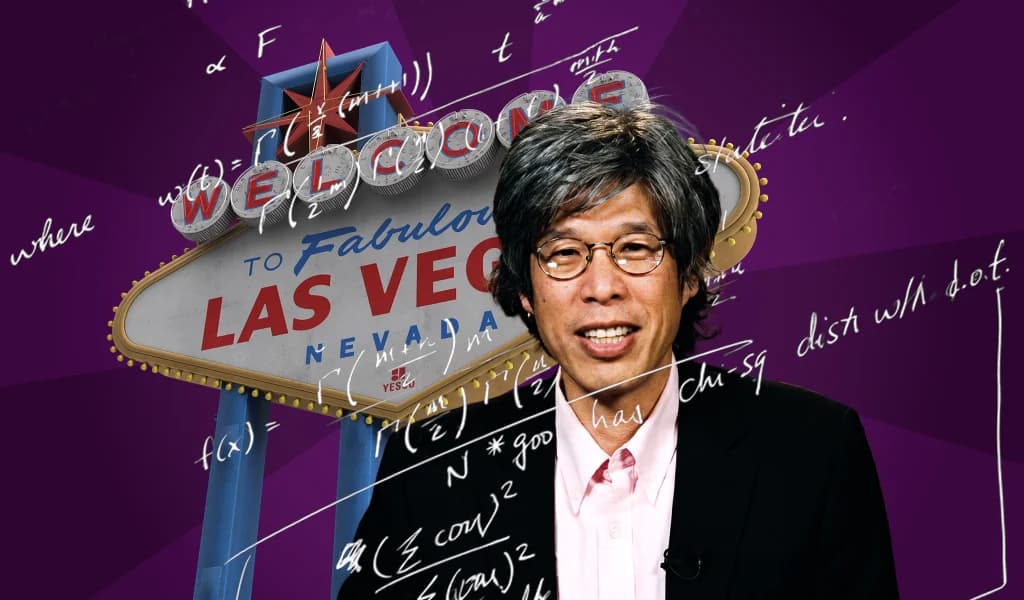
Over the course of John Chang’s decades-long blackjack career, he has beaten the game under all kinds of conditions. Chang has employed a variety of advantage-play strategies, various personalities and disguises – once, in exchange for doing a magazine photo shoot, he received a set of convincing toupees along with fake beards – and evolved into one of the game’s greatest, most enduring practitioners.
Amazingly, in a profession that usually comes with a sell-by date, Chang, who earned a spot in the Blackjack Hall of Fame in 2007, continues to persevere.
When I recently interviewed Chang for Cafe Casino, I couldn’t help but ask when he most recently played. “Last week,” Chang, 68 years old, replied, acknowledging that his nationality contributes to his longevity. “Being Chinese helps. Casinos stereotype Chinese gamblers as losers with a lot of money. Unless somebody recognizes me” – which did happen when Chang attended my book party in a Vegas casino and did not even play a hand of blackjack but was told not to try – “or uses software to spot card counters, I usually can play. But it’s for relatively small stakes; it might be $50 or $100 or $200 units [which means his bets can go up to $1,000 to $2,000 per spot when the count is good]; I’m not going to be the biggest bettor in the casino. Occasionally, I’ll see somebody firing away and that gives me some cover [to bet larger].”
That Chang recently hit the casino to count cards says a lot about his ability to persevere and prosper. Those who saw the movie 21 or read the book Bringing Down the House might remember the character named Micky Rosa. Kevin Spacey played him in the movie and Chang served as a large chunk of inspiration for Rosa in both places.
Brains vs. The House

This stems from the fact that he was an early and critical member of the MIT blackjack team, a deadly assemblage of elite engineering school students who took on the casinos, beginning in 1979, and won mightily. As put by his former team member John Hirschtick, during a blackjack reunion at MIT, “The team proved that brains can, in fact, beat the house.”
Among the lessons they learned while crushing 21? The sum of $70,000 can be stashed in a small purse.
Though Chang and his teammates did nothing that approximated cheating, casinos do not like people who beat the games. In many instances, Chang and his fellow MIT players were backed off and asked to keep away from blackjack. Other times, they were asked to leave the casino entirely.
Then there were the incidents of being questioned by befuddled casino managers with oddly unforgettable names: “I remember being taken into a backroom by a guy called Kenny Rogers. He showed us a sheet of every rated player from the previous night. They were all negative [in terms of outcomes at the tables] except us. He asked what we wanted him to do about it. We said we couldn’t help it if the dealer keeps busting.
“Kenny Rogers was very decent but that was not the norm. Lots of times people got nasty. I’ve been thrown up against a wall, dragged through the casino by security goons, and thrown out of my room in the middle of the night. Most people can’t take that kind of treatment. And we were good people. We were students at a top university. We weren’t doing anything wrong!”
MIT’s card-playing rampage continued through the 1990s, after which Chang continued to play with various groups, alongside his advantage-playing wife Laurie, and as a solo practitioner.
Casinos had good reason to be worried about Chang and his teammates. Under the right conditions, they took large sums from the tables and appeared incapable of losing. Sometimes, a bit of subterfuge was required to get down.
The Art of the Disguise

When I interviewed Chang for my book, Advantage Players [advantageplayersbook.com], he told me about dressing in drag for a session in Atlantic City and pulling off another series of plays by pretending to be the nephew of the Chinese computer mogul Dr. An Wang. Executing his act as young Wang, John Chang managed to win 11 times in a row and partook mightily of casino comps before finally being backed off.
Emphasizing that advantage play strategies do not produce giant wins all the time, Chang acknowledged that MIT lost $10,000 on the first night of a swing through the Caribbean. “It kind of sucks to lose,” he remarked. “But the pit-boss was relieved. It’s the only time I ever said, ‘We have them where we want them.’”
The next day, he continued, “we went on a tear, doing more than one thing to beat the game, and won $190,000. I remember the host coming over to one of our teammates and saying, ‘You’re kicking our ass.’ The teammate said, ‘Yeah. I guess so…’”
Sometimes things got a little ugly. Like the time when casino bosses locked Chang and his crew out of their hotel rooms following a weekend of suspiciously large wins. “I was on the 19th floor,” he remembered. “From outside the hotel, I saw all these balconies stacked up. I remembered that my balcony door was unlocked and figured that maybe I could climb up the side of the building, going from balcony to balcony. But I thought it would be dangerous and reconsidered.”
Instead, he called housekeeping for a rollaway cot, casually followed the housekeeper into his room, and retrieved his luggage. “I’m famous for being cheap and I actually tipped the person with the cot for that one,” said Chang. “The other guys couldn’t believe I tipped.”
What Card Counting Really Teaches You
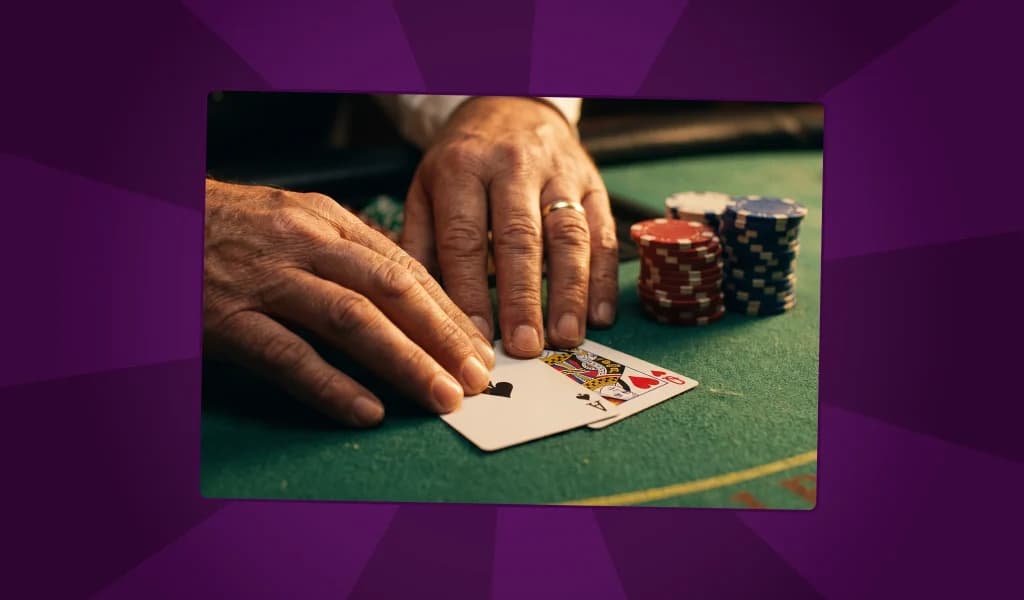
While blackjack has provided Chang with a good life, some great experiences – like the time he got to play blackjack with Ed Thorp, author of Beat the Dealer, the breakout book that was published in 1962 and popularized the original blueprint for card counting – and a way to never need to hold down a fulltime job away from the tables, he emphasizes that the life is not easy and that it is not for everyone.
“Casinos act like if you are even trying to count cards, you will bankrupt them; that’s not true,” said Chang. “In fact, the opposite is often true. A lot of people learn to card-count and they still play a negative game. Maybe they make mistakes, or they lose a few hands and go on tilt or else they’re tired. I’ve played tired and have made mistakes. And if you make just one mistake, while card counting, you lose your edge [on the shoe]. Then if you start to run out of money at the table and don’t have enough to double or split, where you have a two-percent edge or more, well, you just lost that edge. You can do a lot of things that turn positive play into negative. Most people lose. A handful win. And most of the winners rarely make a lifetime career out of it.”
That said, being a serious card-counter, even briefly, comes with its own reward. “Blackjack can be like a scholarship,” said Chang. “For people who are good with numbers and like to play games, it can allow you to not be too concerned about day-to-day expenses while pursing your dream [in another field]. Card-counting can teach you about money management, managing risk, recognizing whether you are lucky or good, handling losing even though you did the correct thing. That’s about identifying the right thing as opposed to the right outcome” – and it’s a key to overall success in life.
Do all of those things correctly, and you might become famous for beating blackjack, as did the MIT team. Chang got hipped to their degree of notoriety several years before the 2008 release of 21, which made his alter ego Mickey Rosa – as a goof, Chang played under that name when he competed in the World Series of Blackjack – famous among the cross-section of people who love movies and love gambling.
The Day He Realized They Were Famous

As Chang remembers it, he and his wife Laurie had just moved to Las Vegas and, to test the waters, he bought into a game at a modest off-Strip casino. That’s when Chang was surprised by his old team’s recognition factor. “I tried sitting down, mid shoe, at a double deck game, not realizing that the casino had instituted a no mid-shoe entry rule,” recalled Chang, explaining that he was altogether unfamiliar with that regulation. “I asked why I couldn’t do it, and this old lady, smoking a cigarette and obviously a regular, croaked, ‘It’s because of those MIT kids.’”
She did not know Chang by name or by face. But the incident still hit close to home: “I was, like, I guess we’re famous or something. But when you’re in the middle of it you never realize what other people know about you.”
More Blackjack Stories

May 12, 2026
The Wild Ride of Blackjack Superstar Don Johnson
He walked out of Atlantic City casinos with millions. Blackjack legend Don Johnson tells us the story behind one of gambling’s most remarkable runs.

September 3, 2026
How Colin Jones and the Church Team Conquered Blackjack
Born-again Christians, cowboy disguises, and a million-dollar bankroll. The story of the Church Team is unlike anything else in blackjack history.

July 27, 2026
A Day in Las Vegas on a $100 Gambling Budget
Discover how to spend a full day in Las Vegas with a $100 gambling budget. Learn where to play, what to eat, and how to maximize casino comps

September 1, 2026
How to Eat Your Way Through Las Vegas – From Cheap Eats to Luxury Dining
Discover how to eat your way through Las Vegas, from affordable eats and famous buffets to food halls, steakhouses, celebrity chef restaurants

June 2, 2026
What First-Time Vegas Visitors Always Get Wrong
I’m sharing some of the biggest rookie mistakes first-time Vegas visitors make and I’m helping you avoid them. Here’s how to not waste money, time, and energy on the Strip.

June 29, 2026
Casino Terms Everyone Should Know
Casino Terms Everyone Should Know Author: Las Vegas Vlogger, @Sayhitomatthew, writes about their first-hand experiences with Las Vegas to give us valuable tips. Matthew is a self-proclaimed foodie who regularly reviews Las Vegas restaurants, buffets, and off-strip eateries as well as providing tours of the Las Vegas Strip, resort rooms, and updates on the newest […]