Roulette Strategy: Smarter Ways to Play the Wheel

The wheel doesn’t care about your feelings. It doesn’t remember the last number, it doesn’t owe you a red after seven blacks, and it has no idea you’ve been waiting for zero since the third spin. What a roulette strategy gives you isn’t a way around the house edge, it’s a framework for how you bet, when you pull back, and how long your session lasts before the math catches up.
This guide covers how bets work, all ten notable systems in one place, and how to pick the one that fits how you actually want to play.
How Roulette Bets Work: Inside vs Outside
Before any system makes sense, you need a clear picture of the two bet families.
Outside bets cover large sections of the board: red or black, odd or even, high (19–36) or low (1–18), a dozen (1–12, 13–24, 25–36), or a column. Even-money bets (red/black, odd/even, high/low) pay 1:1 and win close to half the time, these are the foundation of most systems. Dozens and columns pay 2:1.
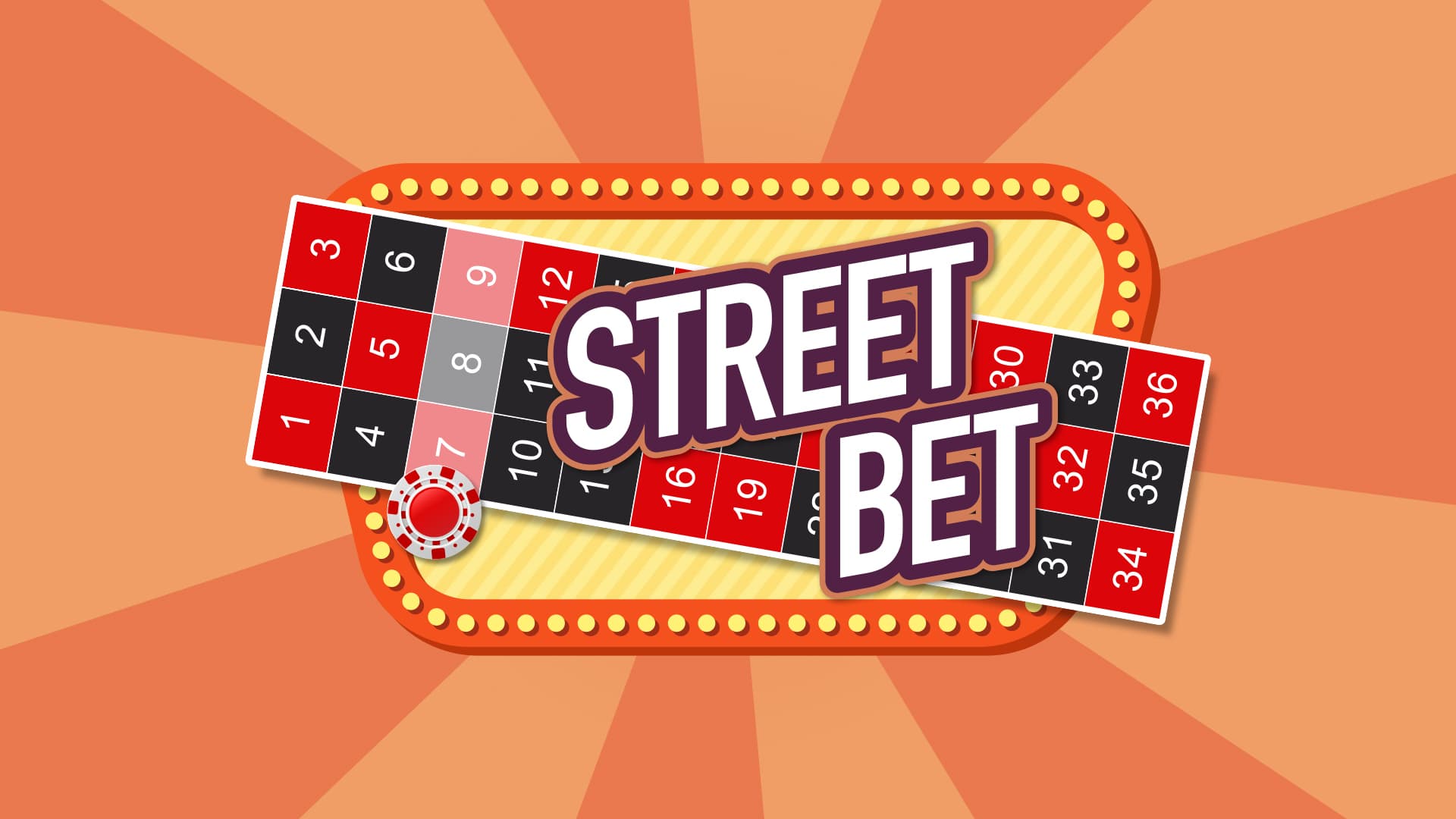
Inside bets are placed on specific numbers or small groups. They pay higher but win less often. A straight-up single number pays 35:1. A split between two adjacent numbers pays 17:1. A street (three numbers in a row) pays 11:1. A corner (four numbers sharing a corner) pays 8:1.
| Bet Type | What It Covers | Payout | Win Chance (European) |
| Straight-up | 1 number | 35:1 | 2.7% |
| Split | 2 adjacent numbers | 17:1 | 5.4% |
| Street | 3 numbers in a row | 11:1 | 8.1% |
| Corner | 4 numbers sharing a corner | 8:1 | 10.8% |
| Red / Black | 18 numbers | 1:1 | 48.6% |
| Odd / Even | 18 numbers | 1:1 | 48.6% |
| Dozen / Column | 12 numbers | 2:1 | 32.4% |
Most roulette systems are built on even-money outside bets. The near-50% win rate creates the regularity that systems are designed to shape. Inside bets produce bigger single payouts but fewer wins, a different emotional experience, and a different kind of bankroll challenge.
The 10 Best Roulette Strategies
Roulette systems divide into two camps: progressive (the bet changes based on recent results) and non-progressive (the bet stays fixed or follows a set plan).
Martingale
Double your bet after every loss; return to the base unit after a win. The logic is that a single win covers all previous losses and returns a one-unit profit. The risk: a losing streak pushes bets toward table limits fast. Needs a healthy bankroll to survive the doubling curve.
Fibonacci
Follow the Fibonacci sequence for bet sizing (1, 1, 2, 3, 5, 8, 13…). Move one step right on a loss, two steps left on a win. Slower escalation than Martingale, but still a progressive system that compounds under pressure.
D’Alembert
Increase the bet by one unit after a loss; decrease it by one unit after a win. Slower and gentler than Martingale, bankroll exposure grows gradually and retreats gradually. Good fit for steady live-dealer sessions where pace and predictability matter.
Labouchere
Write a sequence of numbers (e.g., 1-2-3-4). Bet the sum of the first and last. Cross off both on a win; add the total to the end on a loss. Continue until all numbers are crossed off or the sequence gets unmanageable. More methodical than most systems, suits players who like a structured target.
Paroli
The reverse Martingale, double after a win, reset to base after a loss or after three consecutive wins. You’re riding winning streaks with the house’s money rather than chasing losses with your own. Lower risk profile than most progressive systems.
666 Strategy
Place $66 across red, a split, and a corner to cover 35 of the 37 European numbers at once. High coverage, low loss frequency, but when it does lose, it loses big. See the 666 roulette strategy guide for the full breakdown.
James Bond
Fixed stake split across high numbers (19–36), a line bet (13–18), and zero. Covers more than half the board in one consistent bet pattern. Straightforward, no adjustment required. Needs a decent bankroll to cover the fixed stakes.
$150 Strategy
A specific multi-bet layout designed to cover a wide range of numbers with defined stakes. See the $150 roulette strategy guide for the exact split and how to play it.
Andrucci
Track numbers that appear frequently over 30–37 spins, then bet straight-up on the ‘hot’ numbers. Built on the (incorrect) belief that roulette has hot and cold numbers. Every spin is independent. Andrucci is high-risk, high-payout entertainment, not a genuine edge-finding system.
Oscar’s Grind
Increase the bet by one unit after a win; keep the same bet after a loss. Aim to finish each cycle with a one-unit profit, then reset. Slow and methodical, the grinding part is accurate. Excellent for long, steady sessions where hitting a small target and stopping is the goal.
| System | Type | Risk Level | Bankroll Needed | Best For |
| Martingale | Progressive | High | Large | Short sessions, patient bankroll |
| Fibonacci | Progressive | Medium–High | Medium–Large | Slower escalation than Martingale |
| D’Alembert | Progressive | Low–Medium | Medium | Steady live-dealer sessions |
| Labouchere | Progressive | Medium | Medium | Methodical players with a clear target |
| Paroli | Progressive | Low–Medium | Small–Medium | Riding winning streaks safely |
| 666 | Non-Progressive | Medium–High | Large | Maximum coverage, minimal loss frequency |
| James Bond | Non-Progressive | Medium | Medium | Consistent wide coverage per spin |
| $150 | Non-Progressive | Medium | Medium | Defined multi-bet layout, no adjustment |
| Andrucci | Non-Progressive | Very High | Medium | Entertainment, high-risk, short burst |
| Oscar’s Grind | Non-Progressive | Low | Small–Medium | Long sessions, small target per cycle |
How to Win at Roulette: Smart Play and Bankroll Tips
Here’s the honest version: no system beats the house edge. European roulette runs at 2.7%. American roulette at 5.26%. Every system is working within those numbers, shaping how you experience variance rather than reversing it. Smarter play means longer, more controlled sessions, not guaranteed wins.
Set win and loss limits before you start. Decide what a good night looks like and what a tolerable loss looks like. Honor both when you hit them. The limit you set when you’re calm is the right one, the limit you set when you’re chasing is the dangerous one.
Stick to even-money bets when testing a system. The near-50% win rate gives systems the regularity they’re designed around. Inside bets produce bigger wins but less frequent results, which makes it harder to see whether the system is behaving as expected.
Choose European over American roulette. A single-zero wheel cuts the house edge from 5.26% to 2.7%, nearly half. That reduction applies to every system you run. It’s the single most impactful choice you can make for any roulette strategy.
Start low. Whatever system you’re trying, begin at the lowest available stake. You’ll see more rounds for the same money, get a feel for how the system moves across a session, and avoid hitting table limits during a progressive system’s escalation phase.
Play responsibly. For free, confidential support, contact the National Problem Gambling Helpline at 1-800-522-4700 or visit ncpgambling.org.
Picking the Right Strategy for Your Style

The best system for you depends on two things: how long you want your session to last, and how much variance you’re comfortable with.
Steady grind with minimal risk: D’Alembert or Oscar’s Grind. Both move slowly, both suit longer sessions, and neither escalates fast enough to threaten your entire bankroll over a reasonable run.
Chasing a specific target: Labouchere or Paroli. Both give you a clear end condition, cross off the sequence, complete three-win streak, done. Structured and goal-oriented.
High-coverage, low-loss-frequency: 666 or James Bond. Wide net on each spin, most rounds end in a small win. The losses, when they come, sting more.
High-risk, high-reward: Martingale or Andrucci. Big potential, big exposure. These need either a large bankroll or a short planned session, or both.
Try anything new in practice play first, low or no stakes, before committing a real session budget to it.
Pull Up to the Wheel
Structure and bankroll discipline beat chasing luck every time. Know your system, set your limits, pick the European wheel, and decide on your exit conditions before the first spin.
When you’re ready, roulette games at Cafe Casino are waiting.
FAQs
What is the best roulette strategy?
There’s no single best system, it depends on your bankroll and how you want the session to feel. D’Alembert and Oscar’s Grind suit steady, low-risk players. Martingale or Andrucci suit shorter, higher-risk sessions. No strategy beats the house edge; they shape how you experience variance.
Can you really win at roulette with a strategy?
You can have winning sessions with or without a strategy. What a system can’t do is remove the house edge. Over a large enough number of spins, the house edge wins. Strategy manages your bankroll and session structure, it doesn’t change the math.
What are the best bets in roulette?
Even-money outside bets (red/black, odd/even, high/low) give the most consistent results and are the foundation of most systems. Inside bets (straight-up, split) offer higher payouts but lower win frequency. Neither changes the house edge, the right choice depends on the experience you want.
What’s the safest roulette strategy for a small bankroll?
D’Alembert or Oscar’s Grind, both use slow, low-stakes progressions that won’t escalate your bets aggressively on a losing streak. Start at the table minimum and run either system on even-money outside bets.
What is the 3:2 roulette strategy?
A split-stake approach where part of the bet goes on an even-money outside bet and part on a column or dozen. The combination gives coverage of around two-thirds of the board at different payout rates simultaneously. Not a named system in this guide, but a popular coverage approach.
Is European or American roulette better for strategy?
European roulette. The single-zero wheel carries a 2.7% house edge versus 5.26% on the double-zero American wheel. That gap applies to every bet and every system. Playing European consistently is the simplest, most effective single decision in any roulette strategy.
Does any roulette system beat the house edge?
No. Every spin is independent and the house edge is built into the payout structure, no system circumvents it. What systems do is organize how you bet across a session, which shapes your bankroll curve and can make sessions longer or more structured. They’re tools for discipline, not for defying math.
More Roulette Strategies
May 28, 2026
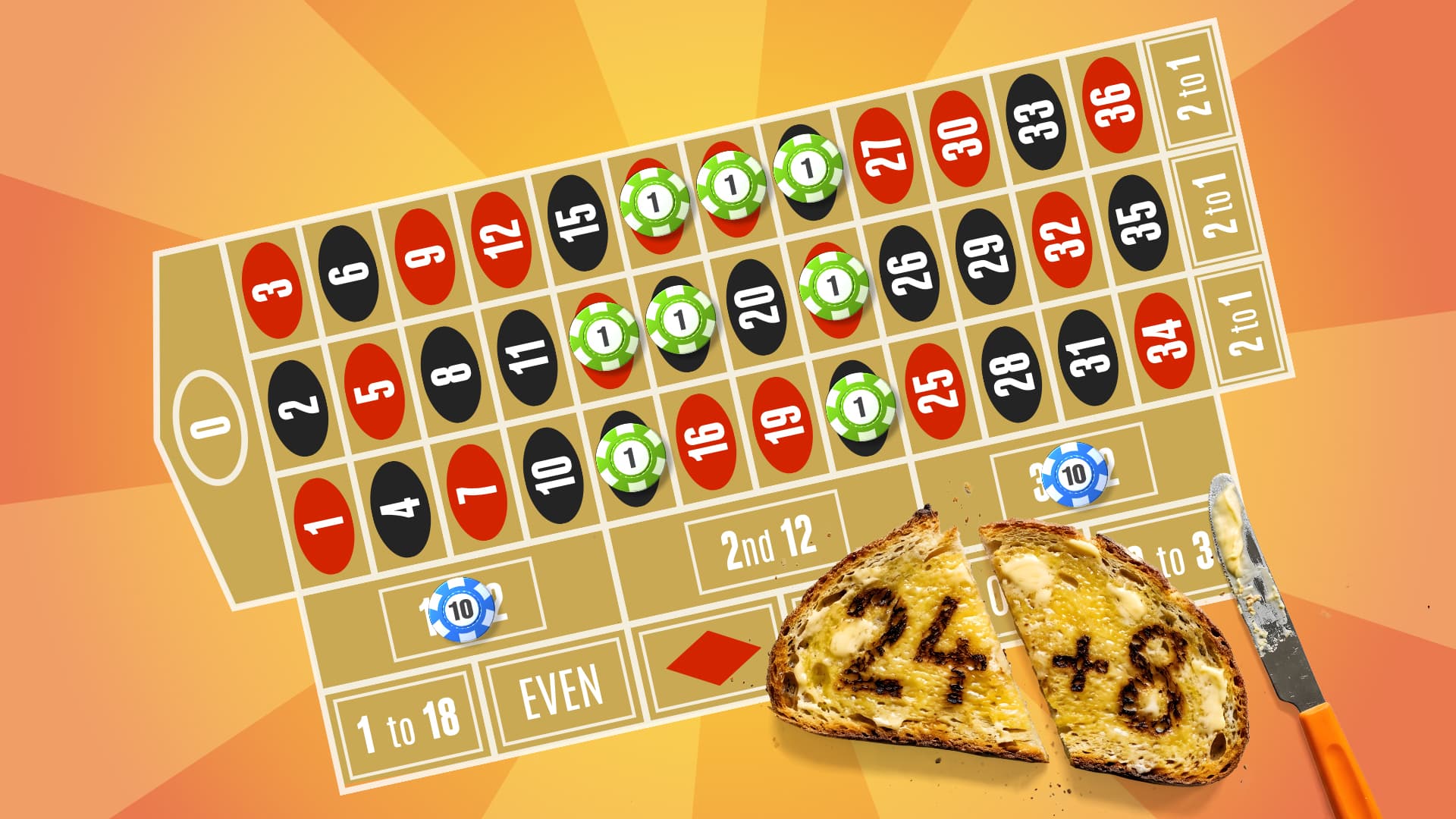
24+8 Roulette System: Spread the Wheel Like Butter
See how you can win most of the time when you spread your bets in the roulette 24+8 strategy. However, there are downsides to consider, too.

July 15, 2026
Best Online Roulette Sites: What to Look For and Where to Play
Learn what to look for when choosing an online casino to play roulette. Get a free checklist and specific details to verify to ensure you choose a winner.
May 28, 2026
Red or Black in Roulette: The *Near* 50-50 Bets
Red or black in roulette has a 47.4% to 48.6% chance of winning, thanks to the green zero/s. Learn how this popular bet works and which strategies use it.
April 22, 2026
Pro roulette players: do they exist?
There are famous roulette players throughout history who have won millions. But are they considered pro, or was it a one-off stroke of luck? Find out here.