JOHN CERASANI AND HIS WINNING FORMULA
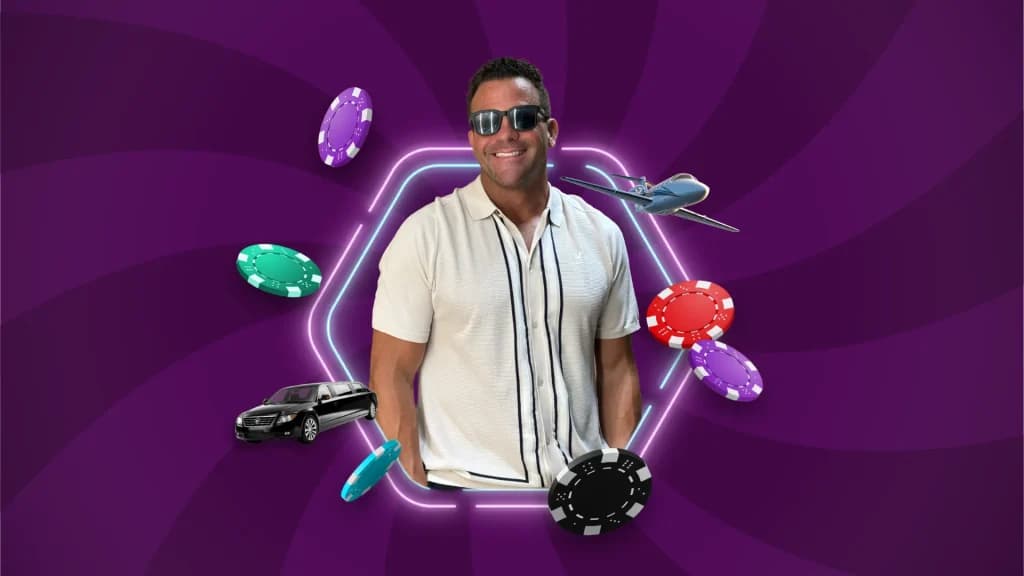
Michael Kaplan, a journalist who specializes in gambling, is the author of Advantage Players: Inside the Winning World of Casino Virtuosos, Master Strategists, and Mathematical Wizards. He sat down with entrepreneur and high-stakes blackjack player John Cerasani to hear how discipline, timing, and knowing when to walk away built his winning formula.
For John Cerasani, timing is everything. He applied it to the sale of his corporate insurance company, which led to an eight-figure windfall – Cerasani himself describes the cash-out as “something that made me generationally wealthy” – and it serves as the centerpiece of his high-stakes blackjack exploits.
ONLINE AND ON TOP OF THE WORLD
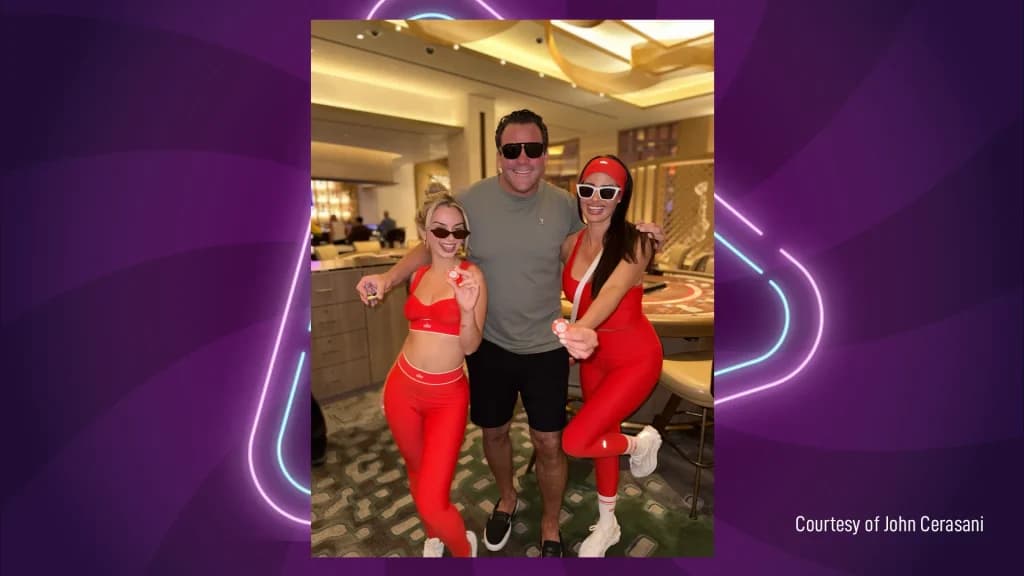
The blackjack plays are compelling enough to have earned him millions of views online. Cerasani videos his casino sessions and posts them to YouTube and Instagram, showing wins, losses, and everything in between – including a bit of socializing, imbibing, and living it up in Las Vegas.
“I like to get a nice room,” he understates to Cafe Casino, going on to point out that it’s usually a comped suite, augmented by all the great restaurant meals that he and his friends might desire. Sometimes, the casino freebies go beyond food and lodging. “The Venetian once flew me out on a Boeing Business Jet, which is a Boeing 737 that has been turned into a private plane. It belonged to the family that owned the casino and the flight was fantastic. That happened during the pandemic, they heard about a big loss I had elsewhere, and wanted to get me in. For me, as far as Las Vegas comps go, that was the coolest thing ever.”
CERASANI’S STRATEGY
Though Cerasani does not card count or hole card or do any of the other moves employed by the people we think of as casino advantage players, he is an AP in his own right.
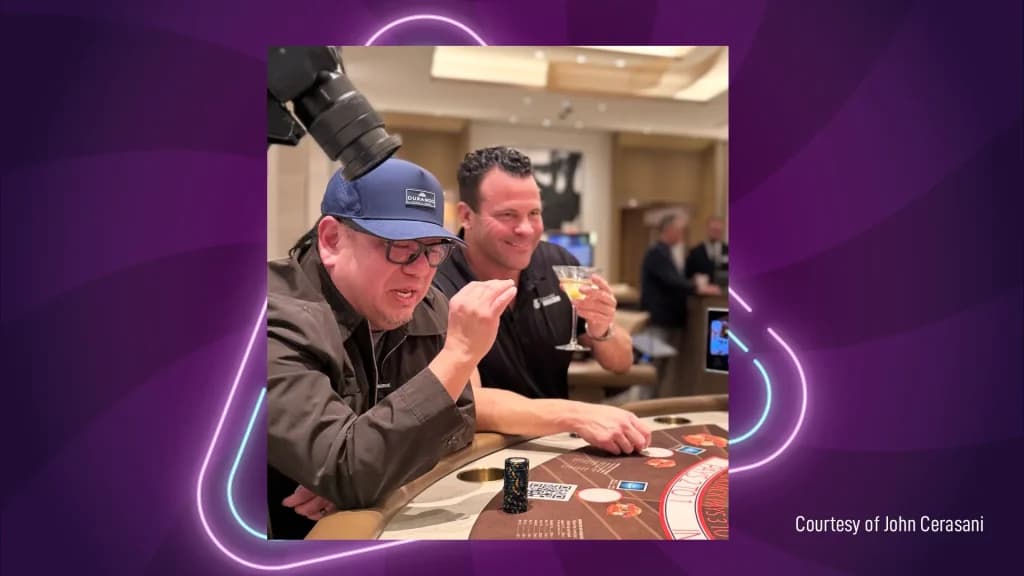
Cerasani says that he finds his edge by deploying a technique that is more about discipline and less about brain-twisting mathematics. “I make a point of not card counting or anything,” admits the business-minded gambler who astutely makes bank off of his social media posts and authored the book 2000 Percent Raise. “If you card count, you have to do it full on. That’s not for me. I enjoy interacting with people at the table, staying loose, and finding my advantages in other ways.
Doing something that every blackjack player is capable of, Cerasani follows basic strategy – on the occasions when he veers away from the standard style of sharp play, he realizes that he’s taking a flyer; like the time when he doubled down with 11 against an Ace, which has positive equity but is slightly worse than simply hitting – and has parameters. Those parameters, for coloring up and ending sessions, are sometimes strict and sometimes elastic, depending on vibe and circumstances. But his goal, which may sound counter-intuitive on the upside, is to leave the table before winning too much or losing too much.
SACRIFICING THE BATTLE OF BLACKJACK TO WIN THE WAR
“When I go to Vegas, as much as I want to enjoy myself, I look at it as a war,” says Cerasani who generally spreads between $1,000 and $5,000 per hand, sometimes playing multiple spots, which is appropriate in light of his $250,000 bankroll per trip and sessions that usually run 30 minutes to two hours, based on how things are proceeding. “I view each session as a battle within the war. It’s okay to lose some of those battles as long as you stay focused on winning the war.
“You don’t want to get beaten up to the point that you lose so much of your bankroll – over the course of a session – that it hurts your ability to fight for the duration of your trip. I say I win 90 percent of the time, and I am basing it on trip totals, not on each session. Before I go home, there is just one question: Am I leaving the casino with more money than I arrived with? The times when I lose, well, that’s what happens when things don’t go your way for the whole freaking weekend. It sucks. But it happens.”
HEATERS AND COOLERS
To keep it from happening too often, he says, “If I am down 50 grand on a session and I get back to even, I stop. I’m not trying for a $100,000 swing. It flips people out when they see me doing it on YouTube, coloring up after a big comeback. They can’t get over that I quit even though I’m on a heater.”
Cerasani also has his approach for when the opposite happens, like when a heater turns cold: “Once I’m up over 25 grand on a session, I really pay attention. Then, if I drop to, say, 15,000, I’ll stop. Of course, I wish I had the $25,000, but I’m not going to risk the $15,000 profit. That’s still a lot of money. I take it and walk.”

As for Cerasani’s deviations from basic strategy, he is at the table to make money, but, as someone who does not need to win in order to pay his mortgage and cover business-class airline tickets, Cerasani also likes to gamble it up a bit and have the kind of good time that comes with taking shots.
“I’ll take a few of those in a row,” he says. “Usually when I’m making smaller bets. And if they go south, then I reign it back in.”
WINNING, WALKING, AND CUTTING LOSSES
Returning to his approach of quitting while ahead (or behind before it becomes too brutal), Cerasani is known as what casino bosses call a hit-and-run player. It’s the grumpy designation for people who get ahead by a certain amount and call it a day.
It takes discipline to get off of the gambling roller coaster with a win and it is disliked by casinos, which should tell you that it is good for players.
His approach to the game is an interesting one. Most APs view blackjack as an endless session. One that begins with the very first hand you play and ends with the very last. After all, if you are going to play, let’s say, 10,000 hours of blackjack over the course of your life, does it matter how you break up that pile of time?
Cerasani, and others, believes that it does. There is something to be said for locking in a win, putting your money in your pocket, and going off to do something that won’t crack your session bankroll. What does Cerasani do? “I like going to the pool.”
He is not alone in finding success via this approach. Last year I was working on a story about a gambler who plays similarly – employing basic strategy and aiming to quit sessions when he is on top rather than pressing his luck and playing till the money and the thrill are both gone. It’s a style of play that got last year’s story-subject booted from one of the top casinos on the Las Vegas Strip.
Able to relate, Cerasani has also received the casino world’s least wanted compliment. “Some of the tribal casinos backed me off,” he says. “Plus, there are others that I don’t want to mention because I’m trying to get good there again.”
When things go the casino’s way, he does what he can to mitigate damage. “I’m not going to lose 100K if it’s the first session of the trip,” says Cerasani who wears his emotions on his sleeve and can be seen steaming after losses while treating his wins in celebratory fashion. “I won’t let myself lose more than $50,000. Then I get up, walk away from the table. That’s another good time for a swim.”

OFF THE FIELD BUT STILL EYEING THE PRIZE
Prior to his generational wealth and love for blackjack, Cerasani played college football and had a pro career in sight.
That was before a spinal injury, discovered via a pre-kickoff physical taken for the Blue-Gray Football Classic all-star game, sidelined him. It led Cerasani from gridiron hopes to insurance-industry success, but his competitive spirit never wavered.
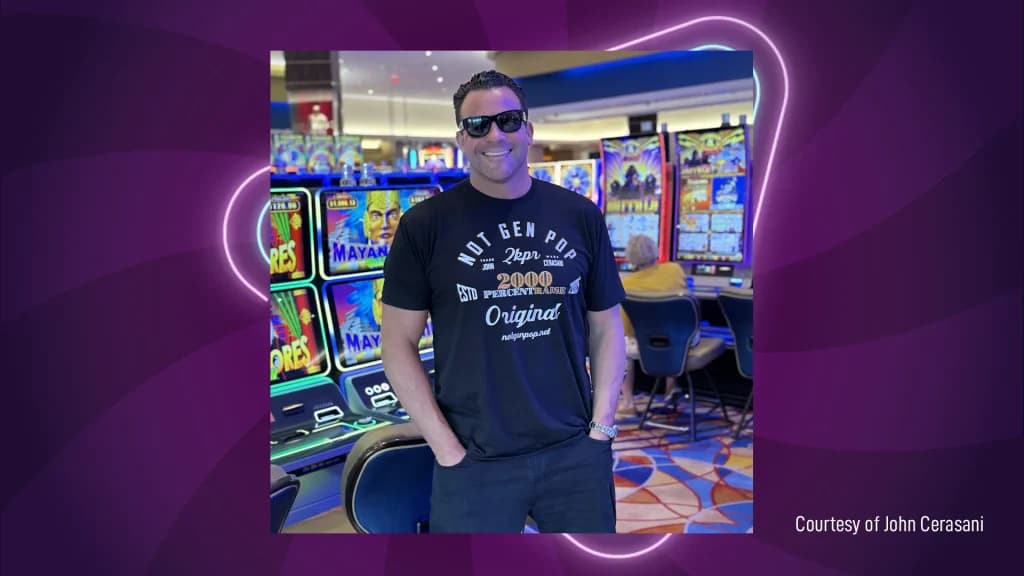
That sensibility paid off handsomely in business, led to his “Not Gen Pop” slogan – “It’s about doing things differently than everybody else in the world,” says Cerasani of the wording seen on tee shirts that he likes to wear — and is expressed in two words he often voices on his posts: “Winners win.”
Cerasani’s ongoing point is that in life, in business, in the casino, winning is key, regardless of the stakes you play for.
Having spent his entire adult life gambling. Cerasani wishes he learned to walk away with minor victories back when he was playing for relative peanuts. “I look back at all these times when I lost my five-grand bankroll because I was trying to turn it into $25,000 rather than being happy to have won $2,000,” he says. “It’s not realistic to expect a 12X profit at the table. I’d be very happy to have not lost all those years. But I was overshooting on how much I thought I could win and doing a big favor to the casinos.”
Summing things up and showing what his disciplined approach is all about, Cerasani recalls an extended session at the Venetian, which ran four hours. He was down low six figures, scraping the felt on his session bankroll, and cobbled his way back by betting $1,000 to $3,000 per hand. “It took a while for me to get even, but I got there,” says Cerasani who quit after recouping what he started with. “I just kept playing, managed my bankroll, and waited for the pendulum to swing back in my direction. And it did. Eventually, it always does.”