
What is edge sorting in baccarat?
If you paid attention in Baccarat 101, you probably walked away thinking baccarat is pure chance. Pick Banker or Player, and the cards decide your fate.
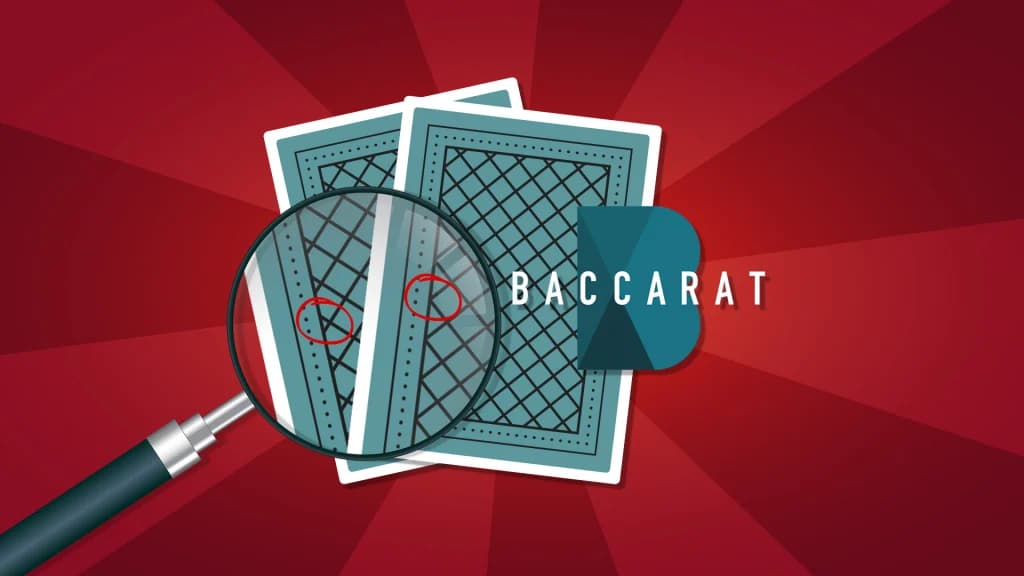
But a few sharp-eyed players noticed something strange. Some decks have tiny differences on the edges of the card backs. By spotting those patterns, a player can sometimes tell whether a card is high or low before it’s dealt.
That technique is called edge sorting, and it made some very lucky, very observant people very rich. For a while, anyway.
Here’s everything you need to know about edge sorting in baccarat, from how it works to why it’s not exactly the cheat code you were hoping for.
How does edge sorting work in baccarat?
Here’s a fun party trick.
Grab a standard deck of cards and flip them face down. At first glance, they all look identical. But look closer, specifically at the long edges on the back. Some decks use patterns that aren’t perfectly symmetrical. Rotate one of those cards 180 degrees, and the edge looks ever so slightly different from the rest.
Most people, even those who know how to play baccarat like pros, would never notice. But advantage players have built an entire strategy around it. Meet the dark art of baccarat: edge sorting.
Baccarat edge sorting is the practice of identifying microscopic asymmetries on the backs of cards to determine whether a face-down card is high or low before it’s flipped.
In baccarat, the two groups that matter most are:
- High cards: 6, 7, 8, 9
- Low cards: 10, Ace, 2, 3, 4, 5
High cards (6–9) are the ones most likely to produce a strong hand without needing a third card. Knowing whether an unseen card is high or low before betting is, to put it mildly, a significant advantage.
But here’s where it gets clever. A player can’t just flip cards over themselves and rearrange the shoe. In reality, the whole scheme depends on a bit of social engineering.
The player, usually a high roller with big-time clout, asks the dealer to rotate certain cards for good luck or superstition. Dealers, trained to keep big spenders happy, often oblige without a second thought. Automated shufflers then help preserve those rotations by passing cards over each other without changing their orientation.
Over time, enough high-value cards get rotated in a specific direction. Now the player can glance at the back edge of a face-down card and know whether it’s going to help or hurt before the reveal.
When executed perfectly, the results can give the player an edge of around 6%. For context, standard card counting in blackjack rarely yields more than a 1–2% edge.
What is an example of edge sorting?
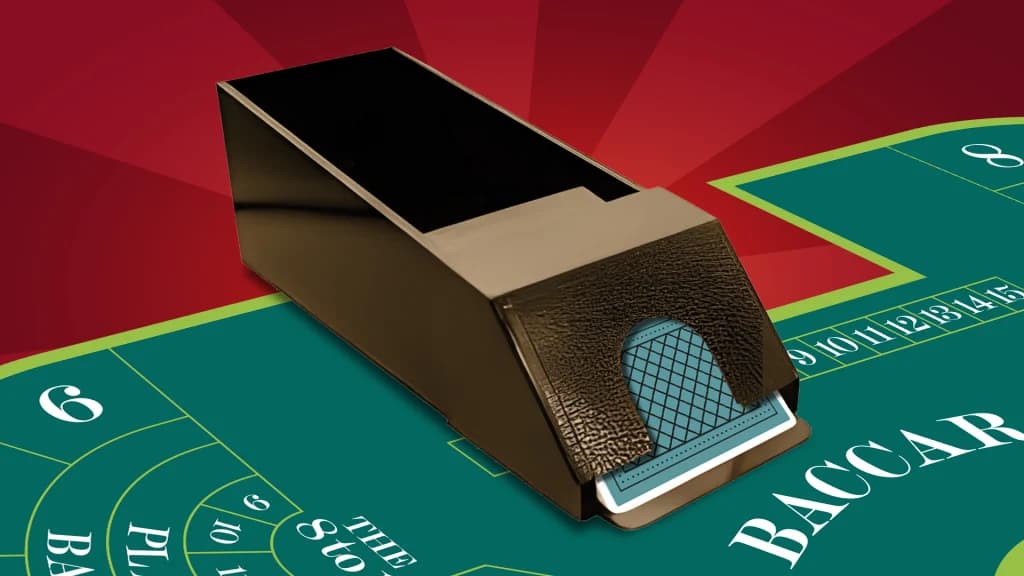
Let’s set the scene. You’re at a high-limit baccarat table. The casino, eager to impress its whale of a guest, has agreed to a few harmless requests: use an automatic shuffler and let the player handle the cards during reveal. Nothing unusual there for a VIP, right?
Over the early rounds, the player casually asks the dealer to rotate certain cards that get drawn—the 6s, 7s, 8s, and 9s—claiming it brings good fortune. The dealer rotates them, they are returned to the shoe, and the automatic shuffler preserves their orientations.
Slowly but surely, the shoe gets “sorted.” High cards face one way; low cards another. Now, before a hand is even dealt, the player can peek at the back edge of a card creeping out of the shoe and roughly know what’s coming.
When the first two cards going to the Player position look like high cards, you bet big on Player. But when they look low, you either bet on the Banker or skip the hand entirely.
It’s not foolproof. You’ll need agonizing patience, meticulous baccarat bankroll management, and focus that most of us reserve for finding our keys in the morning. Oh, and don’t forget the teeny tiny detail of the casino staff’s unknowing cooperation. But when it clicks, the results are dramatic. The average advantage player is said to have a 20.928% edge over the house!
Is edge sorting illegal?
Sorta. It’s complicated.
It’s true that no marked cards, devices, or sleight of hand were used in the making of this baccarat strategy. You’re just using your eyes, and okay, some Sherlock-Holmes-level observation. Last time we checked, that was still legal.
But here’s where it gets murky.
Courts in multiple jurisdictions have ruled that the deceptive element (convincing dealers to rotate cards under false pretenses) crosses into dishonesty. The player uses an “innocent agent” (the dealer) to manipulate the game without the casino’s knowledge or consent.
In plain English, that means you pulled a fast one.
Under certain legal frameworks, that’s considered fraud whether we like it or not.
Also, legally speaking, casinos are private establishments that operate on their own turf, meaning they don’t need to prove a crime to refuse service or void winnings. Just as they can kick you out for counting cards, if they suspect an advantage play, even one that doesn’t break the law, they can show you the door or fight you in court over whether they owe you a dime.
The case of Phil Ivey and Cheung Yin Sun

No conversation about edge sorting in baccarat is complete without the name Phil Ivey, the “Tiger Woods of Poker” and the man who popularized the strategy in the first place.
In 2012, Ivey and his baccarat-savvy companion Cheung Yin Sun visited Crockfords Casino in London. Over two sessions, the pair walked away with approximately $11 million in winnings. When Crockfords refused to pay out, Ivey sued them.
Ivey threw up his hands and pointed out that he hadn’t marked any cards or employed illegal devices, and certainly didn’t break any rules. He’d simply put together his brain and Sun’s exceptional ability to identify asymmetric card edges to gain an advantage. Isn’t that just skill?
“Umm, no,” said the UK courts. The judges ruled that Ivey had used the dealer as an “innocent agent” to alter the integrity of the shoe, which, in itself, constituted cheating under the law.
Ivey appealed, and he lost. He took it to the UK Supreme Court because $11 million is 11 MILLION DOLLARS. But he lost again.
Meanwhile, across the Atlantic, the same year Crockfords was counting its lucky stars, Ivey and Sun also visited the Borgata Hotel Casino in Atlantic City. They took home just under $10 million using the same sneaky method. And for two years, they were home free, until Borgata filed suit and a court ordered Ivey to repay the full amount in 2016. YIKES!
For casinos worldwide, the Phil Ivey baccarat edge-sorting saga was a stark wake-up call, akin to the MIT Blackjack Team. Since then, many properties have updated their procedures.
Now, most casinos:
- Discard shoes after a single use
- Require all wagers to be placed before any cards are dealt
- Build turns into every shuffle to unilaterally neutralize any sorted orientation
When it works, it’s one of the greatest advantages ever recorded at a casino table. When it doesn’t (or when the courts get involved), it’s an extremely expensive lesson in reading the room. If you’d rather keep your life simple and still take advantage of baccarat’s impressively low 1.06% house edge, pull up a seat at Cafe Casino and let the cards do the talking the old-fashioned way.