Roulette’s “Orphans”: The Orphelins Bet Explained

If the title of this guide made you think of a Charles Dickens-type boy asking for porridge on the streets of London, then, surprisingly, you wouldn’t be far off.
‘Orphelins’ in roulette are a group of numbers left “orphaned” on the wheel, not covered by the Voisins du Zéro or Tiers du Cylindre of the French racetrack bets. The Orphelins bet is designed to efficiently cover those numbers.
Color our hair red and curl it like Annie. Because we’re diving in and explaining how the Ophelins roulette bet works.
What are Orphelins?
Orphelins (pronounced or-fuh-lahn) is a French roulette term that literally means “orphans.” Which, in Disney terms, makes them main-character material.
In roulette, it refers to a specific group of numbers on the single-zero European wheel that are left over after you remove the two larger wheel sections called Voisins du Zéro and Tiers du Cylindre (often called Tiers for short).
What are the Orphelins numbers?
The Orphelins numbers are eight specific numbers on the single-zero European roulette wheel: 1, 6, 9, 14, 17, 20, 21, 34. They form their own distinct mini-sectors of the wheel. Eight little numbers standing alone. Very Simba-in-exile. They’re pining for their circle-of-life moment.
How did they end up in their own lonely little sections?
When looking at the French roulette racetrack, the Voisins du Zéro and Tiers du Cylindre each claim large, clearly defined stretches of the wheel. Voisins du Zéro covers the 17 numbers that wrap around the zero section, spanning from 22 through 25 in wheel order. Tiers du Cylindre covers the opposite 12-number arc, running from 27 through 33.
The Ophelins numbers are those that are unaccounted for in the two major categories, forming two smaller lines separate from both major families. That’s where they get their “orphans” nicknames. It’s a bit harsh, and we sincerely hope whoever coined the term never handled Bruce Wayne’s childhood paperwork.
Where are they located on the roulette table?
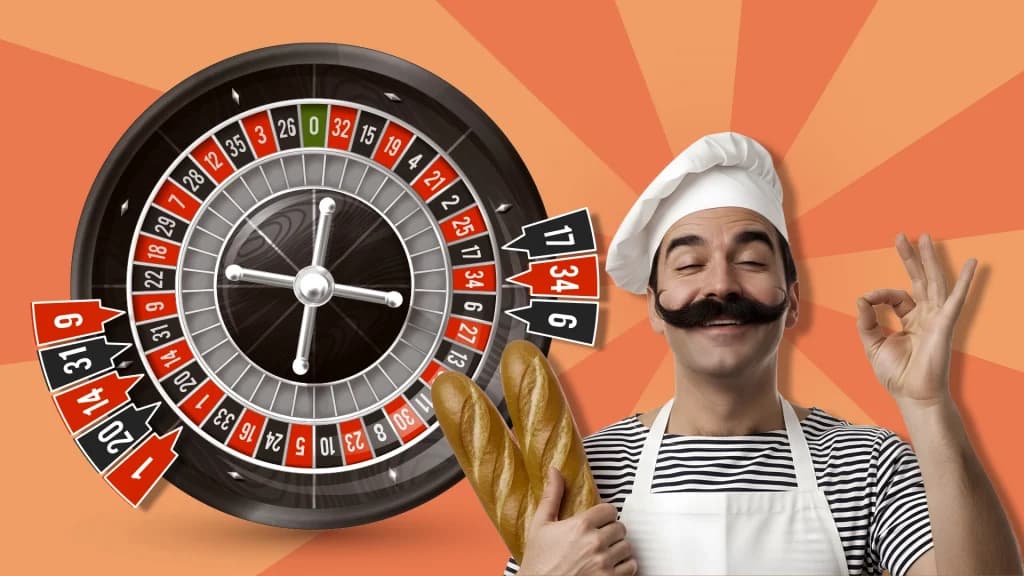
When we look at a standard roulette betting table, the numbers are placed in tidy rows and columns. According to this layout, the Orphelins numbers appear as randomly placed splits and a straight-up number.
The 6 and 9 share a split in the third column near the top. The 14 and 17 form a split in the second column toward the middle. The 20 also holds hands with the 17 in that same middle section, while 31 and 34 pair up lower down across the first and third columns.
Similar to the 666 Roulette Strategy, these numbers appear rather random and scattered throughout, like Annie just hurled five lockets across the room at Miss Hannigan. There’s no obvious pattern if you’re only looking at the numbered layout. And somewhere, Miss Hannigan is blaming the wheel for the mess.
But when the French gaze upon a roulette board, they see (don’t say baguette, don’t say baguette) numbered sectors curved around the wheel like freshly baked baguette slices (dang it). Their betting board is a spinning cylinder divided into arcs and sectors designed after the wheel itself, not straight lines and neat boxes.
On this racetrack, the Orphelins appear as one continuous slice of the wheel, making their sector much easier to see and select in a single move.
How To Place Orphelins Bets
To place an Orphelins bet, you need a single-zero European roulette table. Since the split numbers appear side by side in both the racetrack and table interface, you can use the Orphelins roulette bet with either one.
Traditionally, Orphelins uses five units.
You place:
- A straight-up bet on 1
- A split bet on 6 and 9
- A split bet on 14 and 17
- A split bet on 17 and 20
- A split bet on 31 and 34
If your table has a racetrack graphic, you can usually select “Orphelins” directly, and the system will place those bets automatically. If you’re playing on a standard grid without the racetrack, you’ll need to place the four splits and the single straight-up yourself.
Orphelins Payouts
Orphelins payouts work exactly like the payouts on the individual inside bets you’re placing. The “Orphelins” label just bundles the bet placements for you. You still win based on splits and straight-ups, and subtract your overall bet from the total return.
In the classic Orphelins setup, you place 5 units total:
- 1 unit straight-up on 1
- 1 unit on each split (6/9, 14/17, 17/20, 31/34)
On a European single-zero wheel, a straight-up pays 35:1, and a split pays 17:1.
Here’s how the possible results shake out per spin.
1 hits
You win the straight-up bet. That pays 35:1, plus your 1 unit stake is returned. After subtracting the total 5 units you placed, your net profit is +31 units. If you crave the thrill of winning on a straight-up number, try the Andrucci roulette strategy next.
6 or 9 hits
You win the 6/9 split, which results in a profit of +13 units.
31 or 34 hits
You win the 31/34 split, also paying 17:1, with a +13 units profit.
14 or 20 hits
You win either the 14/17 split or the 17/20 split once. That pays 17:1 plus your returned unit. After subtracting the full 5-unit stake, your net profit is, yet again, +13 units.
17 hits
This is the special case. You win two splits: 14/17 and 17/20. That’s 17:1 paid twice, plus both 1-unit stakes returned. After subtracting your 5-unit total bet, your net profit is +31 units.
One moment, they’re orphans. Next, they’re inheriting 31 units. That’s a Victorian character arc if we’ve ever seen one.
Any other number hits
None of your eight numbers land, and you lose the full 5 units staked.
There’s no rule that says you must use large units, so the Orphelins could be a feasible roulette strategy for a small bankroll, too, but its low coverage comes with higher risk.
Chance Of Winning The Orphelin Bets
When you place a traditional Orphelins bet, you’re covering 8 numbers on a single-zero European wheel, which has 37 total numbers (0-36).
That means your probability of hitting one of the Orphelins numbers on any given spin is:
8 ÷ 37 = 21.62%
So roughly once every four to five spins on average, one of your numbers will land. Of course, roulette doesn’t promise tidy rotation. If you’re not winning on schedule, it doesn’t mean roulette is rigged. Each spin remains independent. It may not hit every spin, but as Annie would say, the sun will come out…if not tomorrow, then eventually.
Importantly, the house edge does not change just because you’re betting on a sector. On European roulette, the house edge stays at 2.7%, whether you bet straight-up, splits, or bundled sectors like Orphelins.
The Orphilans bet might not always land you with a Hogwarts-level destiny, but with 21.62% winning chances, they may appear with a wand from time to time, and that’s an orphan story we can get behind. Embrace the numbers separated by other bets, and turn a hard-knock sector into a happy ending at Cafe Casino.