
How Do Casinos Know If You’re Counting Cards?
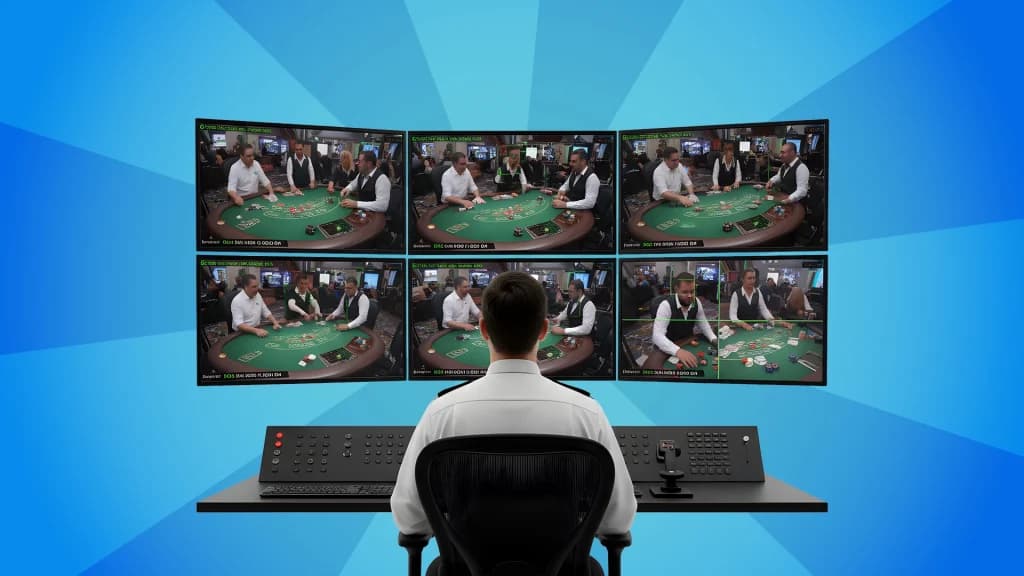
Counting cards looks like the ultimate cheat code for blackjack. But don’t think for a second that casinos are clueless. They’re watching and analyzing like hawks from the cameras above and prowling the floor like Nicky Santoro from Casino.
But don’t worry – if they catch wind of your card counting, they won’t be threatening you with a chainsaw. That kind of casino “customer service” stopped being a thing sometime in the late ’70s. You’re more likely to get banned or blacklisted, which is still unpleasant.
If you’re curious how they sniff it out, we’ll explain how casinos know you’re counting cards. Ya know…for a friend.
Telltale Signs Of A Card Counter
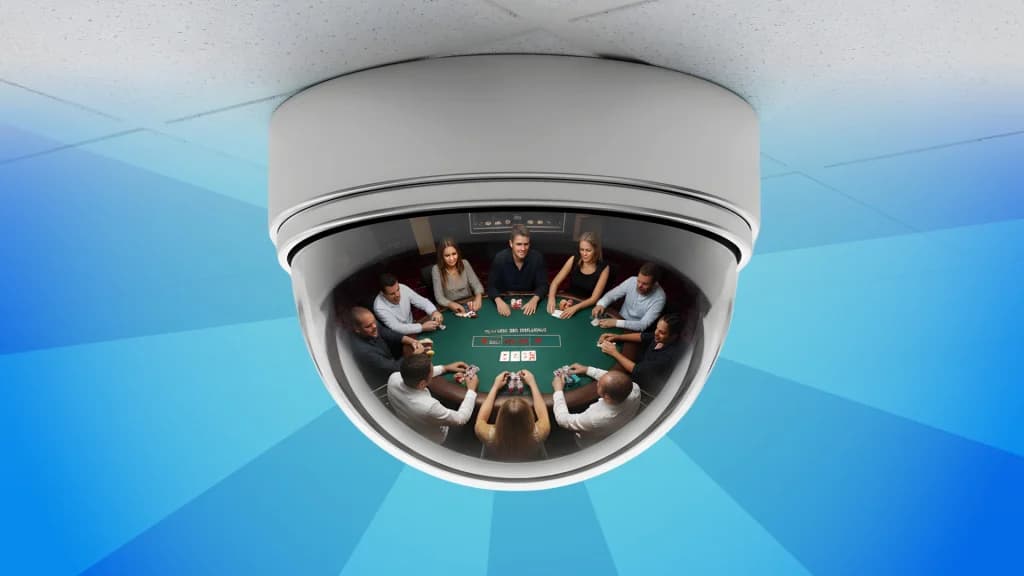
Although a casino feels crowded and like no one’s looking at you, one solo player wearing a flannel shirt and nursing a Bud at the blackjack table, rest assured, someone is watching…dun dun dun. From your betting habits to how you split your pairs, casino security has systems designed to identify anyone trying to gain an edge.
But how do casinos catch card counters, exactly? There are a few ways.
Fluctuating Bets: Your Betting Patterns
The biggest giveaway is your chips. Card counters raise and lower their bets based on the count. When the deck is hot (more 10s and aces), bets jump high. When it’s cold, they shrink. These patterns don’t go unnoticed.
Pit bosses and dealers are trained to spot these patterns, just like in every casino movie where security squints suspiciously at the high roller in seat three. The “eye in the sky” might zoom in to see if your bet jumps line up with a juicy deck. When it syncs too perfectly, you’re basically waving a neon “I count cards” sign.
They can’t prove it, of course. They can’t read your mind. And if they could… they might hear your sincere opinions on the pineapple pizza you had for lunch. (It’s okay, this is a safe space.) But they can still show you the door, whether or not they have proof of counting.
Splitting 10s: And Other Moves That Go Against Basic Strategy
If there’s one move that makes casino staff collectively do a double-take, it’s splitting 10s. Every blackjack chart says it’s a bad idea. You’re already holding 20, which is as sure a shot as Steph Curry at the free-throw line. But to a card counter, a deck rich in aces and face cards means a golden opportunity to double down and get a natural.
To everyone else, it either screams “rookie mistake” or “this guy’s counting.” Dealers clock it instantly because it’s so rare, and the pit boss would already be side-eyeing you. One or two weird hands won’t get you tossed, but pull those mathematically perfect moves, such as from the card-counter’s Bible, the Illustrious 18 chart[1] , too often, and you’ll be under a microscope.
Some of those eyebrow-raising plays include standing on 16 against a dealer’s 10, doubling a 10 against a 10, or hitting a 12 against a 3. They’re all technically correct if you’re counting, but super sus to the casino.
Win/Loss Ratio
Casinos don’t need to crunch your lifetime stats to know something’s off. They just notice when you always seem to win. Most blackjack players bounce between good luck and bad losing streaks, but a card counter’s wins are a bit too steady to chalk up to pure luck.
And we’re not necessarily talking about massive jackpots, here, but an oddly reliable profit session after session. Dealers might casually mention your streak, and suddenly, surveillance is rolling back the footage to see if your wins line up with times the deck would’ve been favorable to a counter. That’s enough for closer scrutiny.
Card Counter Database
Casinos share info about suspected advantage players through private networks, basically the industry’s no-fly list. Names are logged in official databases. These services flag players who’ve been caught or even suspected of counting cards.
Once you’re in the system, any subscribing casino can see your profile, photo, and play history. The next time you walk in, facial recognition cameras or floor staff can match your image against the database, and suddenly, your seat at the table isn’t available anymore. You’ll usually be asked to leave, politely, but firmly, like a flight attendant reminding the gentleman in seat 24C for the umpteenth time that no, he cannot listen to Nickelback on his speaker.
These lists aren’t public, and getting off one is nearly impossible. So for card counters, keeping a low profile (and maybe a new haircut) is almost as important as keeping the count.
What happens if a casino catches a card counter?
Can they chop off your fingers? Detain you in a secret backroom to watch the Joker musical on repeat? Well, shoot. Don’t threaten us with a good time. But truly, no, none of those things will happen unless you’re playing blackjack in a back alley casino run by a guy named Greasy Pete.
Casinos are private property, so they don’t need to prove you cheated. They can legally refuse service for any reason. If they catch you counting cards, they’d either snap a photo, file a report, and add your name to the database, or accompany you on a nice walk to the exit.
Once your name’s in there, word gets out fast.
You could walk into a totally different casino states away, and before you even touch a chip, the pit boss already knows who you are. Facial recognition software makes that process even faster. One quick scan, and suddenly you’re not welcome at any blackjack table in the building.
Once you’re on The List, getting off is nearly impossible.
Is counting cards illegal?
We know that you can get kicked out of a casino for counting cards. But is counting cards illegal? Technically, no.
Card counting lives in that weird gray area where it’s technically legal but completely unwelcome. You’re not breaking the law by tracking which cards have been played. You’re just using your brain. What is illegal, however, is using external help. That includes devices, hidden clickers, phone apps, or even team signals to share the count. That crosses into cheating territory, and that’s where police might actually get involved.
Casinos, however, don’t need the law to deal with you. Again, they’re a private establishment, so they can refuse service, ban you from blackjack, or show you the door with a smile that doesn’t reach their eyes. In fact, most counters are caught and removed quietly to avoid creating a scene.
So no, counting cards won’t land you in a jail cell next to Bubba, but you might have to call it a night early, which would be a big bummer just the same.
Can you count cards in online blackjack?
In short, not really. In long…
Online blackjack uses random number generators (RNGs) that reshuffle the virtual deck after every hand. That means there’s no running count to track. The odds reset entirely each round, making traditional card counting useless in standard online games.
Live dealer blackjack is a little different. Since it uses real decks dealt by a human on camera, you can technically count cards. But casinos know this too, so they usually reshuffle early or use continuous shuffling machines to kill any counting advantage. Even if you manage to track a count for a few hands, the deck rarely lasts long enough to matter.
Counting cards might sound slick, but casinos have been onto that trick since disco was cool. Between the pit bosses, cameras, and databases, your odds of sneaking by are slim. If you want to test your blackjack skills without the side-eye from security, play blackjack at Cafe Casino, where the only pit boss you’ll have to deal with is your cat demanding dinner mid-hand. And let us tell you, you do not want to tick that boss off.