
Do You Split 9s In Blackjack?
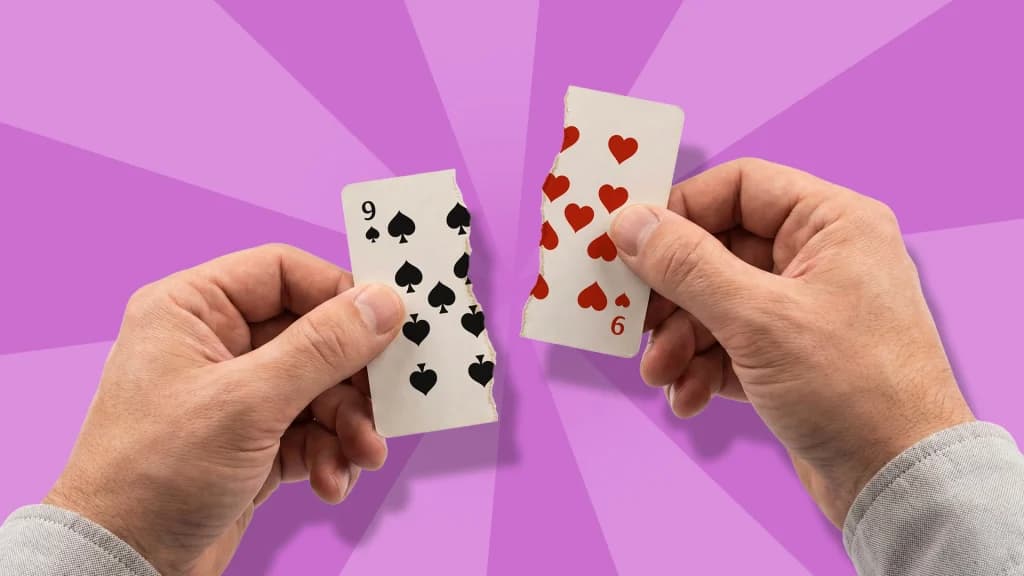
An 18. Pretty much the dream, amiright? Every blackjack chart will tell you to stand, since you’re very likely to bust. But what if your 18 consists of two 9s? That’s a different story. It looks solid, but it could crumble fast against strong dealer upcards.
So, when do you split 9s in blackjack? Let’s walk through when to break those 9s apart like sushi and queso (please no) and when to keep them happily paired like milk and cookies (much better).
When should you split 9s in blackjack?
An 18 looks great – it’s only three points away from 21 – but against a strong dealer upcard, that “pretty sweet” hand turns into a melting ice cream cone. You still want it, but your high hopes of winning are melting away. Those dealer upcards can likely draw a 10 and beat an 18 more often than you’d like, plus it’s way too easy for you to bust.
If you opt to split instead, you could gain two fresh chances to build winning totals. Luckily, the pattern for when to split 9s is the same across single, double, or multi-deck games. So learn it once and use it forever.
Split 9s Against a Dealer 2-6
When the dealer shows 2 through 6, the house is in a weak position, or dabbling in the ‘weak sauce,’ as we like to call it. These upcards often force the dealer into totals that bust more frequently, thanks to the higher concentration of 10-value cards.
Splitting your 9s turns one okay hand into two hands, each starting at a strong 9. From there, you can follow basic strategy, giving you more ways to push the dealer off the cliff.
Split Against a Dealer’s 8
The same logic applies when the dealer shows an 8. From one perspective, standing can work because 18 holds up just fine against a dealer showing an 8. The dealer often finishes on 18 as well, resulting in plenty of pushes rather than losses. Still, splitting performs better over time because each new hand has room to climb while the dealer isn’t presenting a real threat.
These are your highest-value split opportunities. But what happens if the dealer shows a 9? Do you split 9s in blackjack then? Excellent question, young Padawan. Many rookies get pulled to the dark side on this one, so let us shine a little light on what really happens when your 9s face the dealer’s 9.
Also Split on Dealer’s 9
This is the one matchup that most players find surprising. When the dealer flips a 9, neither standing nor splitting wins in the long run. We love a good dessert, but we won’t sugarcoat this – you’re kinda screwed either way. But splitting loses less, and in blackjack, minimizing losses is just as important as maximizing wins.
A locked-in 18 can’t outpace a dealer who frequently lands on 19, but two new 9s give you a chance to build something better. Do you remember when the Chiefs were down 20-10 in Super Bowl LIV, and Mahomes threw that desperate 3rd-and-15 pass? That’s what we call damage control, friends. Think of splitting your nines like that. It still gives you room to play.
When should you avoid splitting a pair of 9s?
A pair of 9s won’t always thank you for pulling them apart. There are dealer upcards where splitting becomes the worst option, and the odds lean heavily toward keeping your 18 exactly as it is.
Don’t Split 9s Against a Dealer’s 7, 10, and Ace
The big red flags are 7, 10, and Ace. Against these cards, your 18 actually performs better when you leave the pair alone. It’s strong enough to hold its ground, and splitting would only drag you into tougher situations with two brand-new hands that don’t have the same stability. Stand instead.
Beware of Double 9s vs. Dealer’s 7
The trickiest matchup here is a pair of 9s versus a dealer’s 7, because it looks like a spot where splitting might help. That’s where players go wrong. Your 18 actually holds up extremely well here because the dealer is more likely to land on a total of 17. That puts you in a winning or pushing position far more often than splitting ever would.
If you split, you turn one solid hand into two hands starting at 9. Sure, you could end up with 19, but who needs it? You’re most likely already ahead with 18.
Splitting 9s Example With Single-Deck Blackjack

Although the guidelines for splitting 9s don’t change across decks, we’ll spell out a clear example with our favorite blackjack variation for its rock-bottom house edge, and that’s single-deck.
Picture the scene. You’re poised at the blackjack table, lookin’ fine, as always. New hair gel? New moisturizer? The dealer hands you your cards, and – gasp! – it’s two 9s. Who could have ever seen this coming?!
The dealer reveals their upcard, and it’s a 6. Having read this brilliant guide on whether you split 9s in blackjack, you remember that a dealer’s 6 means the house is in trouble. This is great news for you.
So you split your 9s. Now you’re holding two hands, starting at 9. You draw a 7 on the first one, giving you a stiff 16. It’s a dreaded total, but you have the basic strategy in your back pocket, and on both an S17 and H17 game, it tells you to stand and let the dealer dig their own grave.
Your second 9 catches a 2, bumping you to 11. In single-deck, an 11 is the moment angels sing. You double down, pull a face card, and lock in a beautiful 21.
Meanwhile, the dealer’s 6 forces them to hit…and hit…and bust. Booya. Take a bow. You’re the hero.
You started with an 18, and by splitting, you built a 16 and a 21 against the weakest upcard in the game. That’s exactly what we want when we split nines.
When you know when to split your 9s and when to keep them together, your wisdom and your skill are a pair made in heaven, like ketchup and fries. And once you’ve got the skill, there’s only one thing left to do: pull up a seat at Cafe Casino, put those sweet moves to work, and start playing blackjack for real.