
Do you split 4s in blackjack? The Four-mula 4 Success
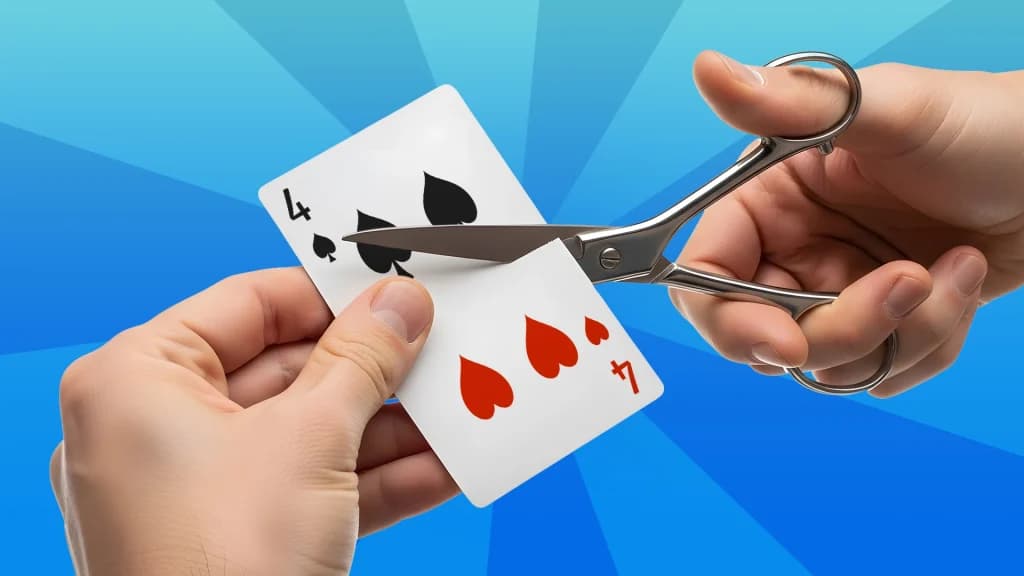
Got a pair of 4s at the blackjack table? Then listen up, because this is four real. Do you hit? Do you split 4s in blackjack? Do you double? Or do you just stare at them and hope one turns into a five?
Some players will tell you never to split your fours, but that’s not entirely true. Rules change between single deck, multi deck, NDAS, and DAS, and so does the strategy for a pair of fours. By the end of this guide, you’ll know when these little 4s turn into a four-midable fource.
What To Do With A Pair Of 4s
For starters, definitely do not stare at them and hope they’ll change. That wouldn’t go over well at all, especially at a land casino. That’s one good reason to play blackjack online!
A pair of 4s gives you a total of 8, which is one of those awkward blackjack totals that needs more context. Your choice of whether to hit, split, or double depends on a few key factors.
Factors at Play
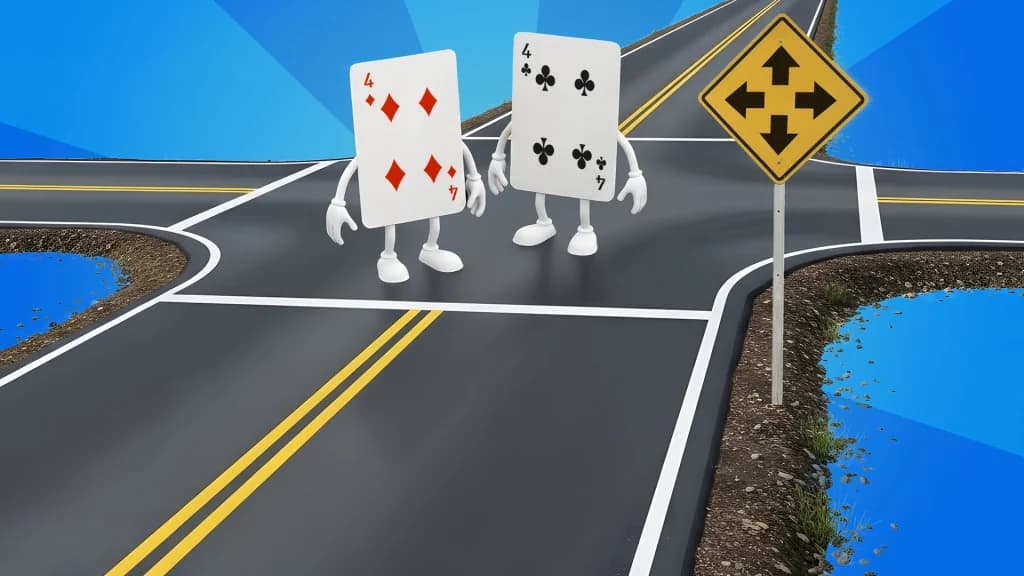
You want to treat a pair of 4s like a tiny crossroads with four possible turns to consider:
- The dealer’s upcard
- The number of decks
- Whether you can double down after splitting (DAS)
- …or not double down after splitting (NDAS)
The Dealer’s Upcard
The dealer’s upcard is step one in the four-mula. It’s the first and most important clue when you’re holding a pair of 4s, because your total of 8 doesn’t mean much until you measure it against what the dealer might build.
Hit Against a Dealer’s 2, 3, 4, 7, 8, 9, 10, A (not 5 or 6)
When the dealer shows a strong card, like a 7 through an ace, your 8 (4+4) has no muscle. Standing is obviously pointless. Splitting won’t help since even drawing a 10-value card (also known as a monkey) lands you with a mega cringe-worthy 14. Doubling is even worse, because you’re betting extra on a hand that rarely wins.
In these dire situations, hitting is the only move that gives you a chance to climb out of the hole. Your 8 can easily turn into an 18, which at least puts up a fight. It might not be an Alex Pereira, but at least it shows up to the ring.
That’s all fine and dandy, but what if the dealer shows a 5 or 6? Is that a better position for your pair of fours? In a way, yes.
If DAS, Split Against a Dealer’s 5 or 6; if NDAS, Hit
A dealer 5 or 6 is the sweet spot because these upcards carry the highest bust rate. When the rules allow doubling after splitting (DAS), you split your 4s against a 5 or 6. Now, both your hands have a real shot at winning while the dealer struggles. If the rules are NDAS, or no double after splitting, skip the split and simply hit.
The Number of Decks
That covers the dealer’s upcard. But there’s more to consider. The number of decks in play changes the entire four-cast for a pair of fours.
Multi-deck Games
- DAS: split against 5 or 6
- NDAS: hit no matter what
In multi-deck blackjack, your 8 stays pretty tame. You’ll split against a dealer 5 or 6 only if DAS is allowed. If the table is NDAS, you’re hitting every time because splitting and doubling lose more on average across those thicker shoes.
That brings us to our next question: Do you ever split 4s in single-deck blackjack? Sometimes.
Single-deck Games
- DAS: split against 4, 5, or 6
- NDAS: double against 5 or 6
Single-deck blackjack operates differently. Your 8 is a little more four-midible, and certain plays are now profitable. With NDAS, doubling an 8 against a 5 or 6 is a stronger move because the single deck boosts your odds of pulling a good card. But when DAS is allowed, the window widens even more, and you can split against a dealer 4, 5, or 6.
If You Can Double Down After Splitting
Whether the table allows doubling down after splitting (DAS) is the rule that really determines whether your pair of 4s stays together or pulls a Ross and Rachel and heads for another breakup.
DAS: Split against 5 or 6
When DAS is allowed, your 4s are more flexible.Splitting against a dealer 5 or 6 is the standout move because you’re not just creating two hands, you’re creating two hands that each have the chance to double. That extra bet is where the long-term profit sneaks in, and it’s why DAS turns splitting 4s into a four-tunate opportunity.
NDAS: Always hit
On the other hand, if the rules are NDAS, your strategy tightens. Splitting loses a lot of its value because you’re turning two weak starters into two hands that can’t take advantage of the dealer’s weakest upcards. That’s why, in NDAS multi-deck games, you simply hit every time.
Single-deck NDAS is the only exception, as we outlined above, because doubling an 8 against a dealer 5 or 6 is the best play.
Quick Glance: When to Hit

Alright, folks, that was a fourk-ton of context. How about we condense the rules for when you split 4s in blackjack and when you hit? You with us? Wonderful. These tips will help you save money in the long run. Let’s start with when you hit.
Aside from the answer of “pretty much always,” hit your 4s when ANY of these apply:
- Dealer shows 7, 8, 9, 10, or A
- Multi-deck NDAS: hit against everything
- Multi-deck DAS: hit against 2, 3, 4, 7-A
- Single-deck NDAS: hit unless doubling against 5 or 6
- Single-deck DAS: hit against 2, 3, 7-A
Overall Tip: If the dealer looks strong or the rules limit your options, hitting is your safest and most profitable long-term move.
Quick Glance: When to Split
That leaves us with when to split your pair of fours.
Split your 4s only in these situations:
- Multi-deck DAS: split 5 or 6
- Single-deck DAS: split 4, 5, or 6
- Resplit if allowed
Overall Tip: Splitting only works when the dealer shows a weak upcard, and DAS is allowed, giving each new hand the power to double.
Now that you know exactly how to handle this sneaky little pair, you’re ready to put your strategy to work. Head to the table to give it a shot, and don’t four-get the most important rule of all: when you play blackjack at Cafe Casino, fun is 4ever.